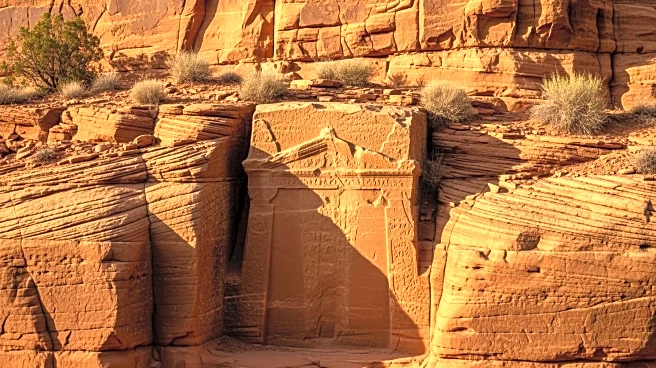




Capitol Reef National Park is not only a geological marvel but also a site rich in human history. Located in south-central Utah, the park has been home to various cultures over the centuries. From the Fremont-culture Native Americans to Mormon settlers, the park's history is a tapestry of human endeavor and adaptation. This article explores the cultural and historical significance of Capitol Reef National Park.
Early Inhabitants and Native American Cultures
The earliest known inhabitants of the
Capitol Reef area were the Fremont-culture Native Americans, who lived near the Fremont River around the year 1000. These people were skilled farmers, cultivating crops such as maize and squash, and storing their grain in stone granaries. The Fremont people left behind petroglyphs and other artifacts that provide insight into their way of life.
In the 13th century, a long drought led to significant changes in the region's Native American cultures, resulting in the abandonment of Fremont settlements. Later, the Paiutes, a Numic-speaking people, moved into the area. They referred to the Fremont granaries as "moki huts," believing them to be the homes of a race of tiny people.
Mormon Settlers and the Establishment of Fruita
Following the American Civil War, Mormon settlers began to establish missions in the remote areas of the Intermountain West. In the 1870s, settlers moved into the high valleys west of Capitol Reef, founding communities such as Loa, Fremont, Lyman, Bicknell, and Torrey. By the 1880s, Mormons had settled the Fremont River valley, establishing the towns of Junction (later renamed Fruita), Caineville, and Aldridge.
Fruita became a prosperous community, while Caineville struggled to survive, and Aldridge eventually disappeared. The settlers engaged in farming and extracted lime and uranium from the local landscape. The community of Fruita was later abandoned, but some of its buildings have been restored by the National Park Service.
Preservation Efforts and National Park Status
Efforts to preserve the Capitol Reef area began in the 1920s, with local boosters promoting the region as "Wayne Wonderland." In 1937, President Franklin D. Roosevelt designated the area as Capitol Reef National Monument to protect its unique geological features. The monument was later expanded and re-designated as a national park in 1971.
Today, Capitol Reef National Park is a testament to the enduring human connection to the land. Visitors can explore the park's rich history through its preserved structures, petroglyphs, and interpretive programs, gaining a deeper understanding of the cultural significance of this remarkable landscape.