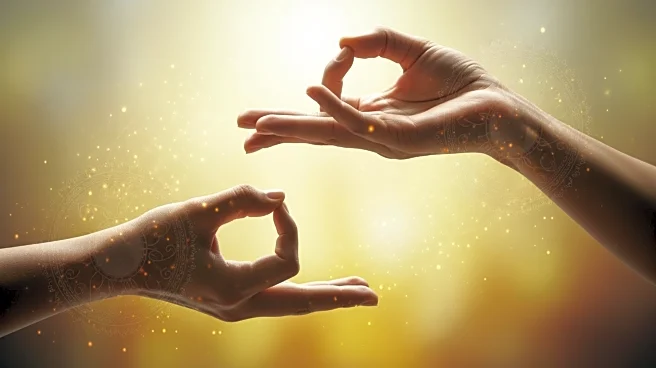

Mudras are more than just hand gestures; they are powerful symbols deeply embedded in the spiritual practices of Hinduism, Jainism, and Buddhism. These gestures, often performed with the hands and fingers,
carry profound spiritual meanings and are integral to various religious rituals, dances, and yoga practices. This article delves into the significance of mudras and their role in the spiritual and cultural tapestry of Indian religions.
Spiritual Significance of Mudras
Mudras are considered seals or marks that convey specific spiritual meanings. In Hinduism, Jainism, and Buddhism, they are used to symbolize various aspects of the divine and the universe. The dhyāna mudrā, for instance, represents meditation and concentration, forming a triangle with the hands that symbolizes spiritual fire or the Three Jewels in Buddhism. This gesture is commonly seen in representations of Gautama Buddha and Amitābha, highlighting its importance in meditation and spiritual focus.
In addition to their spiritual symbolism, mudras are employed in religious iconography and scriptures. The Natyashastra, an ancient Indian text, lists numerous mudras used in dance and meditation, showcasing their dynamic and static applications. These gestures are not only a form of communication with the divine but also a way to express reverence and devotion.
Mudras in Dance and Yoga
Mudras play a significant role in Indian classical dance, where they serve as a form of non-verbal communication. Dancers use mudras to convey emotions, tell stories, and connect with the audience on a spiritual level. The Natyashastra describes various mudras that are integral to dance performances, emphasizing their cultural and artistic importance.
In yoga, mudras are used alongside pranayama, or yogic breathing exercises, to stimulate different parts of the body and influence the flow of prana, or life energy. Hatha yoga incorporates mudras as internal actions involving various body parts, such as the pelvic floor and diaphragm, to enhance spiritual awareness and physical health. These practices highlight the versatility and depth of mudras in promoting spiritual and physical well-being.
Regional Variations and Influence
Mudras have transcended their origins in South Asia, influencing spiritual practices in regions like Laos and Thailand. While these gestures maintain their core symbolic meanings, they have adapted to local cultural contexts, demonstrating the universal appeal and adaptability of mudras.
The spread of mudras beyond India underscores their significance as a spiritual tool and cultural symbol. As they continue to evolve and integrate into various traditions, mudras remain a testament to the rich spiritual heritage of Indian religions and their enduring impact on global spiritual practices.