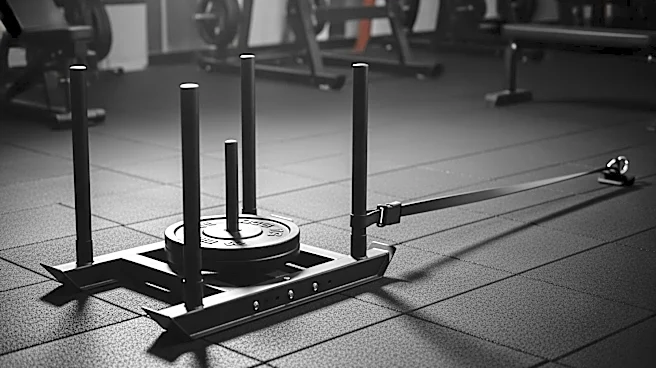








The sled push and sled pull are two popular exercises in the realm of fitness training, each offering unique benefits and challenges. While both exercises involve moving a sled across a surface, they engage different muscle groups and have distinct applications. This article compares the sled push and sled pull, highlighting their effectiveness and how they can be incorporated into a fitness routine.
Understanding the Sled Push
The sled push is performed by facing the sled and
pushing it forward. This exercise can be executed at various angles, such as upright or with the body low and close to horizontal. The primary muscles targeted during a sled push include the quadriceps, hamstrings, and core, with significant activity in the calves. Additionally, the sled push engages the chest, arms, and shoulder muscles, making it a comprehensive full-body workout.
One of the key benefits of the sled push is its ability to improve sprint performance. Studies have shown that complex training involving sled pushing followed by sprinting can enhance sprinting capabilities. The sled push is also roughly as effective as a barbell back squat for training the lower body, with the added advantage of higher calf activity and reduced stress on the spine.
Exploring the Sled Pull
In contrast, the sled pull involves attaching a harness or straps to the sled and pulling it along a surface. This exercise can be performed by walking forward or facing the sled and walking backward. The sled pull primarily targets the muscles of the back, including the lats and traps, as well as the biceps and forearms.
Sled pulling has been shown to improve sprint performance, similar to the sled push. However, the focus is more on building strength and endurance in the upper body and back. The exercise is often used in training programs for athletes looking to enhance their pulling power and overall strength.
Choosing the Right Exercise
When deciding between the sled push and sled pull, it is essential to consider individual fitness goals and preferences. The sled push is ideal for those looking to improve lower body strength and sprint performance, while the sled pull is better suited for individuals aiming to build upper body strength and endurance.
Both exercises can be incorporated into a high-intensity interval training (HIIT) program, where short bursts of intense exercise are alternated with brief recovery periods. This method of training is effective for improving athletic capacity and conditioning.
In conclusion, the sled push and sled pull are both valuable exercises that offer unique benefits. By understanding their differences and applications, individuals can choose the exercise that best aligns with their fitness goals and incorporate it into their training regimen for optimal results.