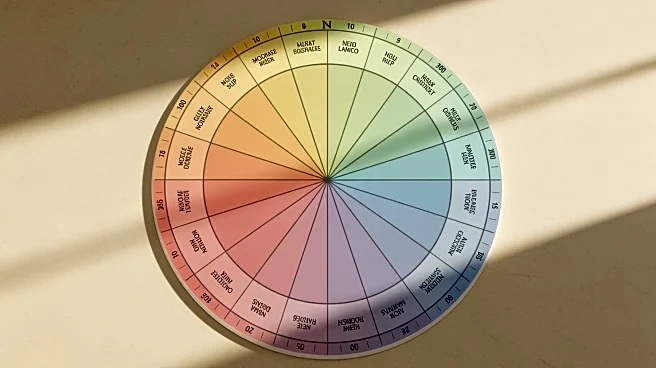





Fragrances have long been a part of human culture, used to enhance personal appeal and create pleasant environments. One of the most intriguing tools in the world of perfumery is the fragrance wheel, a diagram that helps classify and understand the relationships between different scents. This article delves into the concept of the fragrance wheel, its development, and its significance in the perfume industry.
Origins and Development
The fragrance wheel, also known as the
aroma wheel or perfume wheel, is a circular diagram that illustrates the relationships among various olfactory groups based on their similarities and differences. The concept was first introduced by Austrian perfumer Paul Jellinek in 1949 with his Odor Effects Diagram. This early version laid the groundwork for future iterations of the fragrance wheel.
In 1979, U. Harder at Haarman & Reimer developed the Fragrance Circle, which further refined the classification of scents. The concept gained significant traction in 1983 when sensory chemist Ann C. Noble introduced the Wine Aroma Wheel, which was adapted for use in perfumery. Michael Edwards, a renowned perfumery taxonomist, created his version of the fragrance wheel in 1992, which has become a widely used tool in the industry.
Structure and Function
The fragrance wheel is designed to show the inferred relationships among olfactory groups. It is divided into primary scent families such as Woody, Floral, Amber, and Fresh, each further divided into subfamilies. For example, the Floral family includes subfamilies like Floral Amber and Soft Floral. The wheel's structure allows for a visual representation of how different scents relate to one another, with neighboring groups sharing common olfactory characteristics.
Michael Edwards's fragrance wheel is particularly notable for its detailed classification. It includes subfamilies like Floral Oriental and Mossy Woods, and even accounts for the complex Chypre class, which overlaps with both the Oriental and Woody families. This detailed classification helps retailers and consumers better understand and select fragrances based on their preferences.
Impact on Perfumery
The fragrance wheel has become an essential tool in the perfume industry, aiding in the classification and marketing of fragrances. It helps consumers navigate the vast array of scents available, making it easier to find perfumes that match their personal preferences. Retailers also benefit from the wheel, as it provides a structured way to organize and present their fragrance offerings.
Moreover, the fragrance wheel has influenced the way perfumers create new scents. By understanding the relationships between different olfactory groups, perfumers can craft unique fragrances that appeal to specific consumer tastes. The wheel's classification system also allows for the exploration of new scent combinations, pushing the boundaries of traditional perfumery.
In conclusion, the fragrance wheel is a valuable tool that has significantly impacted the perfume industry. Its ability to classify and relate different scents has made it easier for consumers to find fragrances they love and for perfumers to create innovative new scents. As the world of perfumery continues to evolve, the fragrance wheel remains a vital resource for understanding and appreciating the art of scent.