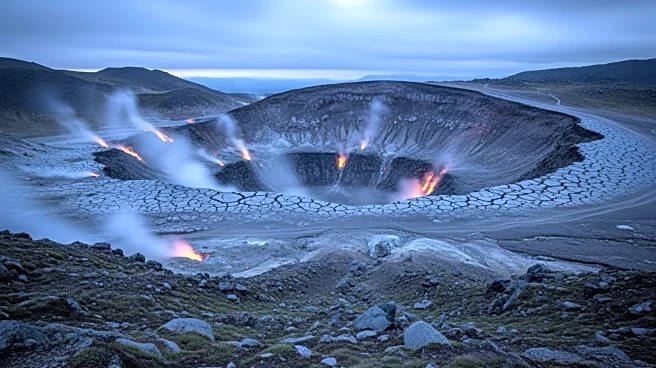




The Yellowstone Caldera, often referred to as the Yellowstone Supervolcano, is a dormant yet potentially dangerous geological feature located in Yellowstone National Park. While it has not erupted in 70,000 years, its presence continues to intrigue scientists and visitors alike. The caldera's vast magma chamber and geothermal activity make it a subject of ongoing study and monitoring.
Dormant Status
The Yellowstone Caldera is considered dormant, having last erupted
approximately 70,000 years ago. Despite its inactivity, the caldera remains a focal point for scientific research due to its potential for future eruptions. The magma chamber beneath the caldera is substantial, containing a significant volume of partially molten material. This chamber provides the heat necessary for the park's famous geothermal features, including geysers and hot springs.
The Yellowstone Volcano Observatory closely monitors the caldera's activity, using advanced imaging techniques to study the magma reservoir. While the caldera is not currently erupting, periodic uplift of the caldera floor indicates ongoing subterranean magma movement. These changes are carefully tracked to assess any potential risks.
Potential Hazards
Although the Yellowstone Caldera is dormant, it poses potential hazards due to its size and geological activity. The caldera's magma chamber is one of the largest globally, and its eruptions have historically been catastrophic. The most recent supereruption, which occurred 640,000 years ago, released vast amounts of ash and pyroclastic materials, significantly impacting the surrounding environment.
In addition to volcanic eruptions, the caldera is prone to hydrothermal explosions. These events occur when steam and gas build up beneath the surface, leading to sudden and violent releases. While smaller than volcanic eruptions, hydrothermal explosions can still pose risks to visitors and park infrastructure.
Monitoring and Research
The Yellowstone Volcano Observatory plays a crucial role in monitoring the caldera's activity and assessing potential hazards. Scientists use a variety of tools, including seismic monitoring and ground deformation measurements, to track changes in the caldera. These efforts are essential for understanding the dynamics of the magma chamber and predicting future activity.
Research at Yellowstone extends beyond monitoring. The caldera serves as a natural laboratory for studying volcanic processes and the interactions between magma and the Earth's crust. This research contributes to our understanding of volcanic systems worldwide and helps improve hazard assessment and mitigation strategies.