





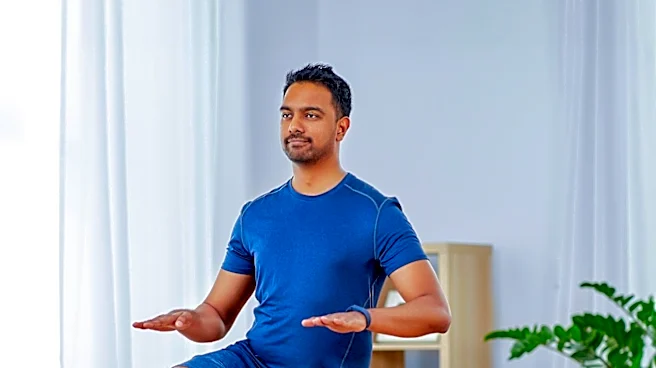

Yoga, once a spiritual practice rooted in meditation, has undergone a significant transformation over the centuries. Today, it is widely recognized as a form of exercise that combines physical postures, breathing techniques, and relaxation. This evolution from a spiritual discipline to a global exercise phenomenon is a fascinating journey that highlights the adaptability and enduring appeal of yoga.
Early Beginnings and Spiritual Roots
Yoga's origins are deeply spiritual, with its practices
aimed at uniting the human spirit with the divine. The term "yoga" itself is derived from a Sanskrit word meaning "to attach, join, harness, yoke." In its early forms, yoga was practiced by ascetic groups in South Asia, such as the Nath yogins, who used it to manipulate vital forces within the body. These practices were closely associated with religions like Hinduism, Jainism, and Buddhism.
Haṭha yoga, a branch of yoga that utilizes physical postures, emerged as a means to control these vital forces. It included practices like purifications, postures, and rhythmic breathing, which were believed to provide supernatural powers. However, the practice of asanas, or postures, was a minor aspect of the spiritual work, often performed slowly and held for long periods.
The 20th Century Transformation
The transformation of yoga into a form of exercise began in the 20th century, influenced by Western physical culture and Indian traditions. Yoga gurus like Yogendra and Kuvalayananda revived posture practice, emphasizing its health benefits. The flowing sequences of Surya Namaskar, or Salute to the Sun, were introduced by the Rajah of Aundh in the 1920s, blending yoga with gymnastics.
Several influential yoga schools emerged during this period, each contributing to the modern practice of yoga. Pattabhi Jois founded Ashtanga Vinyasa Yoga, which led to Power Yoga, while B.K.S. Iyengar created Iyengar Yoga, known for its precise postures. Indra Devi brought yoga to Hollywood, teaching it to celebrities and further popularizing it in the West.
Global Spread and Modern Adaptations
Yoga as exercise spread rapidly across America and Europe, eventually reaching a global audience. It evolved into a multi-billion dollar industry, encompassing classes, teacher certifications, clothing, and equipment. Modern yoga styles emphasize various aspects, such as aerobic intensity, alignment, spirituality, or energy awakening.
Despite its commercialization, yoga retains elements of its spiritual roots. Some styles focus on spiritual practice, while others are purely secular, aimed at exercise and relaxation. The relationship between yoga and Hinduism remains complex, with debates about its cultural appropriation and religious connections.
Today, yoga is practiced by millions worldwide, celebrated for its physical and mental health benefits. Its journey from a spiritual discipline to a global exercise phenomenon underscores its adaptability and enduring appeal.