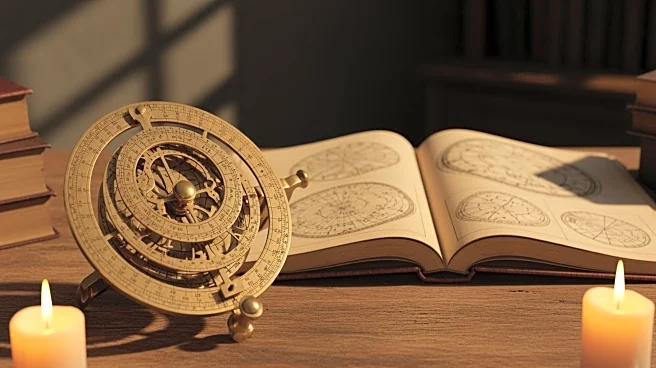




Regiomontanus, a key figure of the German Renaissance, made significant contributions to the field of astronomy. His work in this area was instrumental in advancing the understanding of celestial phenomena and laid the groundwork for future astronomical discoveries. This article explores his contributions to astronomy and their lasting impact.
Advancements in Astronomical Studies
Regiomontanus was deeply involved in the study of astronomy, and his work in this field was groundbreaking.
He collaborated with his mentor, Georg von Peuerbach, to produce a modernized version of Ptolemy's Almagest, a foundational text in astronomy. Although Peuerbach passed away before completing the work, Regiomontanus fulfilled his promise to finish and publish it, ensuring that the knowledge was preserved and disseminated.
In addition to his work on the Almagest, Regiomontanus made significant contributions to the development of astronomical instruments. While working for János Vitáz, the archbishop of Esztergom, he calculated extensive astronomical tables and built instruments to aid in celestial observations. His work in this area was highly regarded and contributed to the advancement of astronomical studies during the Renaissance.
Observations and Publications
Regiomontanus was also known for his observations of celestial phenomena. In 1472, he and Bernhard Walther observed a comet, attempting to estimate its distance from Earth using the angle of parallax. Although their calculations were not entirely accurate, their efforts represented an early attempt to understand the physical dimensions of comets.
His dedication to the study of astronomy extended to his publishing efforts. In Nuremberg, he founded the world's first scientific printing press, where he published the first printed astronomical textbook, "Theoricae novae Planetarum," by Peuerbach. This publication helped spread astronomical knowledge across Europe and influenced future generations of astronomers.
Lasting Impact on Astronomy
Regiomontanus's contributions to astronomy had a lasting impact on the field. His work on the Almagest and his development of astronomical instruments advanced the understanding of celestial phenomena during the Renaissance. His observations and publications helped disseminate knowledge and inspired future astronomers, including Nicolaus Copernicus.
Today, Regiomontanus is remembered as a pioneering astronomer whose work laid the foundation for future discoveries. His dedication to the study of celestial phenomena and his innovative approach to publishing ensured that his legacy endured. Regiomontanus's contributions to astronomy continue to be appreciated by modern scholars, highlighting his significance in the history of science.