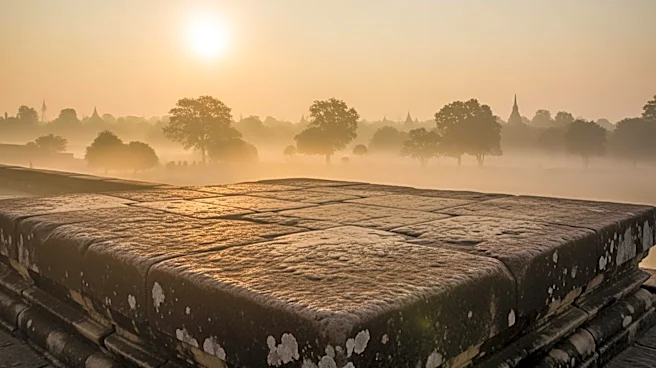







Vajrasana, also known as the Diamond Throne, holds a significant place in the history of Buddhism. Located in Bodh Gaya, India, this ancient stone slab is believed to be the very spot where Gautama Buddha attained enlightenment. The Vajrasana is not just a physical structure but a symbol of spiritual awakening and devotion. This article delves into the historical and cultural importance of Vajrasana, exploring its origins, architectural features,
and its role in Buddhist practices.
Origins and Historical Context
The Vajrasana is thought to have been established during the reign of the Maurya king Ashoka, between 250 and 233 BCE. Ashoka, a devout follower of Buddhism, is credited with marking the site where Buddha meditated under the Bodhi tree. This act of devotion was part of Ashoka's broader efforts to promote Buddhism across his empire. The Vajrasana served as a bodhimanda, or a seat of enlightenment, symbolizing the Buddha's spiritual journey.
The stone slab was initially placed under the Bodhi tree, beside the Mahabodhi Temple. Over the centuries, it became a focal point for Buddhist pilgrims and devotees. The Vajrasana was not intended to be occupied but rather served as a symbolic relic, representing the presence of the Buddha. Devotees would often kneel in prayer before it, acknowledging its spiritual significance.
Architectural Features
The Vajrasana is a thick slab of polished grey sandstone, measuring 7 feet 10 inches long, 4 feet 7 inches broad, and 6 inches thick. Its top surface is intricately carved with geometrical patterns, featuring a circular design in the center and a double border of squares. These carvings echo the decorative elements found on the Pillars of Ashoka, suggesting a connection between the two.
The sides of the Vajrasana are adorned with carvings of honeysuckles and geese, motifs commonly seen on Ashoka's pillar capitals. These decorations not only enhance the aesthetic appeal of the Vajrasana but also carry symbolic meanings. The geese, or hamsa, are often associated with spiritual purity and the journey of the soul.
Cultural and Religious Impact
The Vajrasana's significance extends beyond its historical and architectural features. It is a symbol of the Buddha's enlightenment and a testament to the enduring legacy of Buddhism. Tibetan Buddhist texts even refer to Bodh Gaya itself as Vajrasana, highlighting the site's importance in Buddhist tradition.
Throughout history, the Vajrasana has been a site of pilgrimage for Buddhists from around the world. It represents a place of spiritual awakening and serves as a reminder of the Buddha's teachings. The Vajrasana continues to inspire devotion and reverence, making it a vital part of Buddhist heritage.