






Apollo 16 was not just a mission to land humans on the Moon; it was a scientific expedition aimed at uncovering the mysteries of the lunar surface. The mission's scientific objectives were ambitious, focusing on geological exploration and the deployment of scientific instruments. This article examines the scientific achievements of Apollo 16 and their impact on our understanding of the Moon.
Geological Exploration
The primary scientific goal of Apollo 16 was to explore the
Descartes Highlands, a region believed to hold clues about the Moon's volcanic past. Astronauts John Young and Charles Duke conducted extensive geological surveys during their time on the lunar surface. They collected 94 kilograms (207 pounds) of rock and soil samples, which were later analyzed on Earth.
The samples collected by Apollo 16 provided significant insights into the Moon's geological history. Scientists discovered that the Descartes Highlands were not volcanic, as previously thought, but were instead formed by impact processes. This finding challenged existing theories about the Moon's formation and evolution, leading to new hypotheses about its geological history.
Deployment of Scientific Instruments
In addition to geological exploration, Apollo 16 was equipped with a suite of scientific instruments designed to study the Moon's environment. The crew deployed the Apollo Lunar Surface Experiments Package (ALSEP), which included a seismometer, a magnetometer, and a heat flow experiment. These instruments provided valuable data on the Moon's seismic activity, magnetic field, and thermal properties.
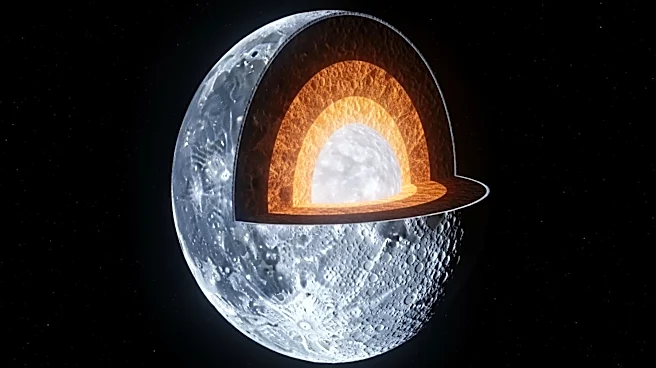
The seismometer detected moonquakes, which helped scientists understand the Moon's internal structure. The magnetometer measured the Moon's weak magnetic field, providing clues about its core and magnetic history. The heat flow experiment offered insights into the Moon's thermal evolution, contributing to our understanding of its geological processes.
Impact on Lunar Science
The scientific achievements of Apollo 16 had a lasting impact on lunar science. The mission's findings challenged existing theories and prompted new lines of inquiry into the Moon's formation and evolution. The data collected by the mission's instruments continue to be analyzed by scientists, providing a foundation for ongoing research.
Apollo 16 also demonstrated the value of human exploration in scientific discovery. The ability of astronauts to conduct fieldwork, make observations, and collect samples in real-time was crucial to the mission's success. This human element remains a key consideration in future lunar exploration efforts.
In conclusion, Apollo 16 was a landmark mission in the history of lunar science. Its scientific achievements expanded our understanding of the Moon and laid the groundwork for future exploration. The mission's legacy continues to influence lunar research and exploration today.