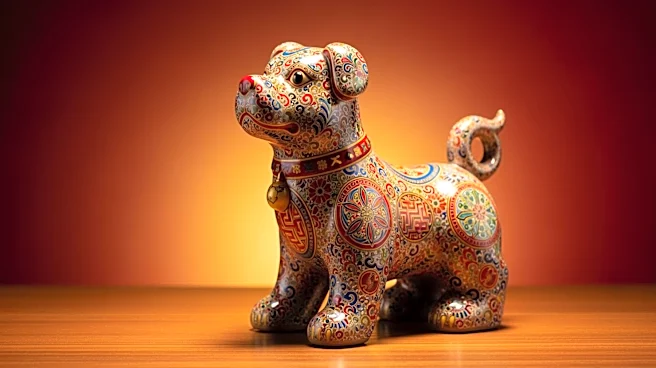

The Dog is a significant figure in the Chinese zodiac, representing the eleventh position in the 12-year cycle of animals. This zodiac sign is deeply intertwined with the Chinese calendar and is symbolized
by the Earthly Branch symbol. The Dog is not just a representation of the animal itself but also carries cultural and philosophical meanings. In this article, we will delve into the role of the Dog in the Chinese zodiac and its association with the five elements.
The Dog's Position in the Zodiac
The Chinese zodiac is a 12-year cycle, with each year represented by a different animal. The Dog holds the eleventh position in this cycle. This position is not arbitrary; it is part of a larger system that connects each animal to specific years and elements. The character for Dog in Chinese is "狗," which is used to denote both the animal and its zodiac representation. The Earthly Branch symbol associated with the Dog is "戌," which further ties it to the Chinese calendar system.
The Dog's position in the zodiac is significant because it reflects certain personality traits and characteristics believed to be shared by people born in these years. Those born in the Year of the Dog are often thought to be loyal, honest, and reliable, much like the animal itself. This belief is deeply rooted in Chinese culture and influences how people perceive and interact with those born under this sign.
The Five Elements and the Dog
In addition to its place in the zodiac, the Dog is also associated with the five elements of Chinese philosophy: Metal, Water, Wood, Fire, and Earth. Each element is linked to specific years, creating a cycle that repeats every 60 years. For example, the Metal Dog years include 1910 and 2030, while the Water Dog years include 1922 and 2042.
These elements add another layer of meaning to the Dog's zodiac sign. Each element is believed to influence the characteristics of the Dog in different ways. For instance, a Metal Dog might be seen as more determined and strong-willed, while a Water Dog could be more adaptable and intuitive. This elemental association provides a more nuanced understanding of the Dog's role in the zodiac and its impact on those born under this sign.
The Cultural Significance of the Dog
The Dog's role in the Chinese zodiac extends beyond mere symbolism. It is a part of cultural traditions and practices, influencing how people celebrate and understand the passage of time. The Year of the Dog is often marked by celebrations and customs that honor the traits associated with this sign.
In 2018, for example, the Year of the Dog was celebrated with various cultural events and the issuance of lunar new year stamps in many countries. These stamps and celebrations highlight the global recognition of the Chinese zodiac and its cultural significance. The Dog, with its associations of loyalty and protection, plays a vital role in these traditions, reminding people of the values it represents.
Overall, the Dog in the Chinese zodiac is a multifaceted symbol, rich with cultural, philosophical, and elemental meanings. Its position in the zodiac and its association with the five elements offer a complex and intriguing perspective on this beloved sign.