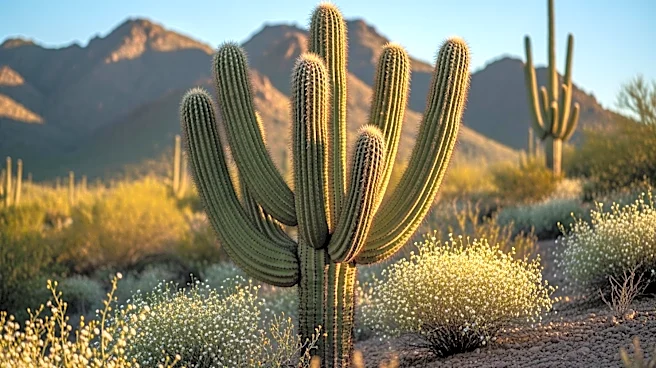





Saguaro National Park, located in the heart of the Sonoran Desert, is a haven for biodiversity. The park's two districts, the Tucson Mountain District and the Rincon Mountain District, offer a wide range of habitats that support a rich variety of plant and animal life. From the iconic saguaro cactus to the diverse array of wildlife, the park is a living testament to the resilience and adaptability of desert ecosystems.
Flora of the Park
The plant life in Saguaro National
Park is as diverse as it is fascinating. The park is home to the giant saguaro cactus, which can grow up to 60 feet tall and live for over 200 years. These cacti are a keystone species in the Sonoran Desert, providing food and habitat for numerous animals. In addition to saguaros, the park boasts 24 other species of cactus, including the fishhook barrel, staghorn cholla, and Engelman's prickly pear.
The Tucson Mountain District features desert scrub and grassland communities, while the Rincon Mountain District includes oak woodland, pine-oak woodland, and mixed conifer forests at higher elevations. This variety of plant communities supports a wide range of species, from the low-lying desert shrubs to the towering trees of the Rincon Mountains.
Fauna of the Park
The animal life in Saguaro National Park is equally diverse. The park is home to 30 species of medium and large mammals, including cougars, coyotes, bobcats, and javelinas. The Rincon Mountain District, with its higher elevations and wetter climate, supports a greater diversity of species compared to the Tucson Mountain District.
Birdwatchers will find plenty to admire in the park, which hosts 107 bird species. Notable residents include the great horned owl, cactus wren, and the Mexican spotted owl, a threatened species. The park's reptiles and amphibians are also well-represented, with 36 reptile species and three amphibian species calling the park home.
Conservation Challenges
Despite its rich biodiversity, Saguaro National Park faces several conservation challenges. Invasive species, such as buffelgrass, pose a significant threat to the native ecosystem. This drought-tolerant plant competes with native species for resources and increases the risk of wildfires. Efforts to manage buffelgrass include hand-pulling and the application of herbicides during wet weather.
Climate change also poses a threat to the park's biodiversity. Rising temperatures and prolonged droughts can impact the survival of species, particularly those that rely on specific environmental conditions. Conservation efforts are crucial to preserving the park's unique ecosystems and the species that depend on them.
Saguaro National Park's biodiversity is a testament to the resilience of desert ecosystems. The park's diverse plant and animal life offer a glimpse into the complex web of interactions that sustain life in the Sonoran Desert. As visitors explore the park, they are reminded of the importance of preserving these natural treasures for future generations.