



Durvasasana, an advanced yoga pose, has not only challenged practitioners with its complexity but has also found a place in the rich tapestry of Indian art. This pose, named after the sage Durvasa, has been depicted in various forms across centuries, showcasing its cultural and historical significance.
Early Depictions in Indian Statues
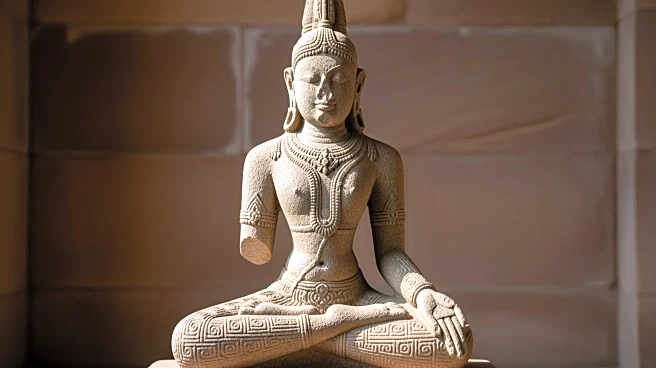
The depiction of Durvasasana in Indian art dates back to the 8th century, with statues found in Karnataka and Tamil Nadu. These early representations
highlight the pose's importance in the region's cultural and spiritual practices. The statues often portray the pose with one leg hooked behind the neck, capturing the essence of the asana's complexity and balance.
These historical depictions serve as a testament to the pose's enduring presence in Indian tradition. They reflect the integration of yoga into daily life and spiritual practices, emphasizing the connection between physical postures and mental discipline.
The Sritattvanidhi and Its Illustrations
The 19th-century Sritattvanidhi, a comprehensive text on yoga and other disciplines, includes illustrations of Durvasasana. This text provides valuable insights into the pose's execution and variations, offering a glimpse into the historical understanding of yoga practices.
The Sritattvanidhi illustrates a pose similar to Durvasasana, named Trivikramasana, which involves placing a foot on the neck and standing up. This depiction highlights the pose's complexity and the skill required to perform it, further cementing its status as an advanced asana.
Cultural Significance and Legacy
Durvasasana's cultural significance is intertwined with its naming after the sage Durvasa, known for his wisdom and temper. This connection adds a layer of depth to the pose, as it embodies the sage's focus and determination. The pose's presence in art and texts reflects its role in spiritual and physical practices, serving as a bridge between the two.
The legacy of Durvasasana in Indian art and culture continues to inspire practitioners today. Its historical depictions remind us of the pose's enduring significance and the rich tradition of yoga in India. As practitioners attempt to master this challenging asana, they connect with a lineage that spans centuries, embracing both the physical and spiritual aspects of yoga.