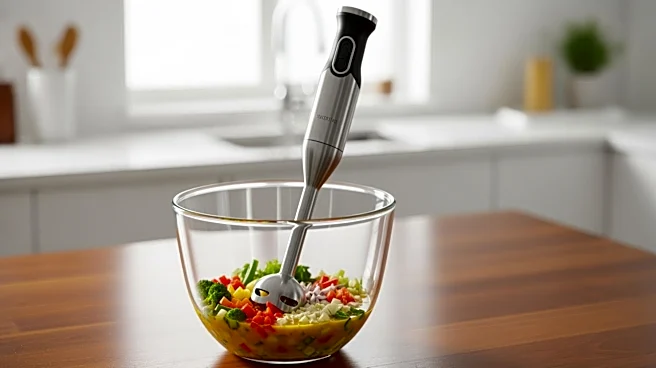





Immersion blenders, also known as stick blenders or hand blenders, have become a staple in many modern kitchens. These handheld devices offer a convenient way to blend ingredients directly in the container, making them ideal for a variety of cooking tasks. Unlike traditional blenders, immersion blenders do not have their own container, which allows for greater flexibility and ease of use. This article explores the practical applications and benefits
of using immersion blenders in everyday cooking.
Practical Applications
Immersion blenders are particularly useful for tasks that involve blending large volumes or hot liquids. For instance, when making soups, transferring hot liquid to a traditional blender can be cumbersome and potentially dangerous. An immersion blender allows you to blend the soup directly in the pot, reducing the risk of spills and burns. This feature is especially beneficial for those who frequently prepare large batches of soup or other hot dishes.
In addition to soups, immersion blenders are excellent for making sauces, smoothies, and purees. Their compact design makes them easy to maneuver, allowing you to achieve the desired consistency with minimal effort. Whether you're whipping up a quick smoothie for breakfast or preparing a delicate sauce for dinner, an immersion blender can handle the task with ease.
Benefits of Immersion Blenders
One of the primary benefits of immersion blenders is their convenience. They are lightweight and easy to store, making them a practical choice for kitchens with limited space. Unlike countertop blenders, which can be bulky and difficult to clean, immersion blenders are simple to maintain. Most models feature detachable blending heads that can be easily washed by hand or in a dishwasher.
Another advantage of immersion blenders is their versatility. They can be used in a variety of containers, from pots and pans to mixing bowls and pitchers. This flexibility allows you to blend ingredients without having to transfer them to a separate container, saving time and reducing cleanup. Additionally, many immersion blenders come with various attachments, such as whisk and chopper accessories, further expanding their functionality.
Limitations and Considerations
While immersion blenders offer numerous benefits, they do have some limitations. They are generally less powerful than countertop blenders, which means they may struggle with tougher tasks like crushing ice or blending thick mixtures. For these types of tasks, a high-powered countertop blender may be more suitable.
It's also important to consider the ergonomics of the immersion blender. Since the user must hold down a switch to operate the device, prolonged use can become tiresome. When selecting an immersion blender, look for models with comfortable grips and easy-to-use controls to enhance your blending experience.
In conclusion, immersion blenders are a versatile and convenient tool for any kitchen. Their ability to blend directly in the container, combined with their ease of use and maintenance, makes them an excellent choice for a wide range of cooking tasks. Whether you're a seasoned chef or a home cook, an immersion blender can be a valuable addition to your culinary toolkit.