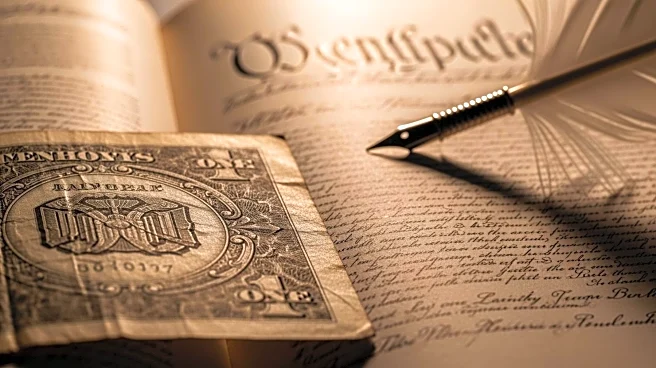




The Legal Tender Cases were a series of landmark Supreme Court decisions that addressed the constitutionality of the Legal Tender Act of 1862. These cases were pivotal in determining the federal government's authority to issue paper money as legal tender. The rulings not only resolved immediate legal disputes but also set important precedents for the U.S. monetary system. By examining these cases, we can understand how the Supreme Court shaped the nation's
financial policies during a critical period in American history.
Hepburn v. Griswold: Challenging the Legal Tender Act
The first major challenge to the Legal Tender Act came in the form of Hepburn v. Griswold in 1869. The case centered on the question of whether the government could compel creditors to accept paper money for debts contracted before the act's passage. Chief Justice Salmon P. Chase, who had previously served as Secretary of the Treasury and played a role in formulating the act, delivered the majority opinion.
In a 5-3 decision, the Supreme Court ruled that the Legal Tender Act violated the Due Process Clause of the Fifth Amendment. The Court held that the act's retroactive application to pre-existing debts was unconstitutional, as it deprived individuals of their property without due process. This decision was a significant blow to the government's financial strategy, as it undermined the use of paper money to settle debts.
Knox v. Lee and Parker v. Davis: Reversing the Decision
The legal landscape shifted dramatically with the Supreme Court's rulings in Knox v. Lee and Parker v. Davis in 1871. These cases revisited the constitutionality of the Legal Tender Act, and the Court ultimately overturned its previous decision in Hepburn v. Griswold. The addition of two new justices, Joseph Bradley and William Strong, played a crucial role in this reversal.
In a 5-4 decision, the Court upheld the Legal Tender Act, affirming that Congress had the authority to issue paper money as legal tender. The majority opinion emphasized the government's power to address national emergencies, such as the Civil War, and to implement necessary measures to ensure economic stability. This ruling reinforced the federal government's ability to use paper currency to meet its financial obligations.
The Legacy of the Legal Tender Cases
The Legal Tender Cases had a profound impact on the U.S. monetary system and the role of the Supreme Court in shaping economic policy. By affirming the constitutionality of paper money, the Court established a precedent that allowed for greater flexibility in the nation's financial practices. This decision paved the way for future innovations, such as the establishment of the Federal Reserve System in 1913.
The rulings also highlighted the dynamic nature of constitutional interpretation, as the Court adapted its decisions to address changing economic realities. The Legal Tender Cases remain a testament to the Supreme Court's influence in defining the boundaries of federal power and its ability to respond to the nation's evolving needs.