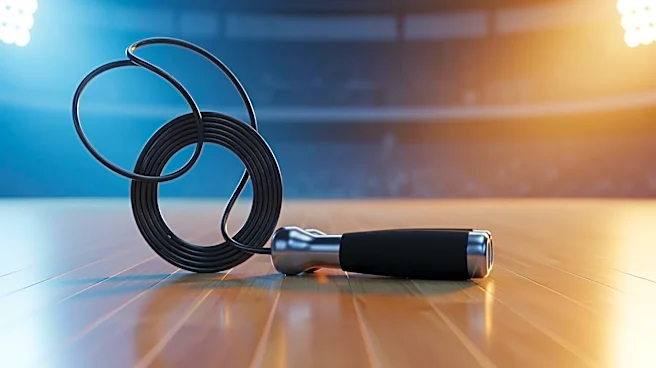









Jump rope, once a simple childhood pastime, has evolved into a recognized competitive sport with international tournaments and governing bodies. This transformation highlights the sport's growing popularity and the increasing complexity of its techniques and competitions. Governed by the International Jump Rope Union (IJRU), jump rope now features a variety of disciplines and events that challenge participants' speed, creativity, and coordination.
The Rise of Competitive Jump Rope
Jump rope's journey from playgrounds to competitive arenas began with the formalization of its rules and the establishment of organized competitions. The International Jump Rope Union (IJRU) was formed by merging the International Rope Skipping Federation and the World Jump Rope Federation. This merger unified the sport under a single governing body, which now oversees international competitions and standardizes techniques.
The IJRU held its first world tournament in Colorado City, Colorado, in 2023, followed by another in Kawasaki, Japan, in 2025. These events marked significant milestones in the sport's history, showcasing the talent and dedication of jump rope athletes from around the world. The IJRU's recognition by the Global Association of International Sports Federations (GAISF) as an Observer further solidified jump rope's status as a legitimate competitive sport.
Disciplines and Techniques in Competitive Jump Rope
Competitive jump rope features a variety of disciplines, each with its own set of challenges and skills. Freestyle routines allow athletes to showcase their creativity and technical prowess through a combination of jumps, tricks, and choreography. Speed events, on the other hand, test participants' ability to perform the maximum number of jumps within a set time frame.
Athletes employ a range of techniques to excel in these events. Basic jumps, alternate foot jumps, and criss-crosses are foundational skills that competitors build upon to execute more complex maneuvers. Advanced techniques, such as double unders and triple unders, require precise timing and coordination, pushing athletes to their physical limits.
The Global Impact of Competitive Jump Rope
The growth of competitive jump rope has had a significant impact on the sport's global reach and popularity. National and regional organizations, such as the American Jump Rope Federation, work alongside the IJRU to promote the sport and organize competitions at various levels. These efforts have led to the inclusion of jump rope in events like the AAU Junior Olympic Games, further increasing its visibility and appeal.
As jump rope continues to gain recognition as a competitive sport, it attracts athletes of all ages and backgrounds. The sport's accessibility and versatility make it an attractive option for those seeking a challenging and rewarding athletic pursuit. With its rich history and dynamic evolution, jump rope is poised to continue its growth on the international stage.