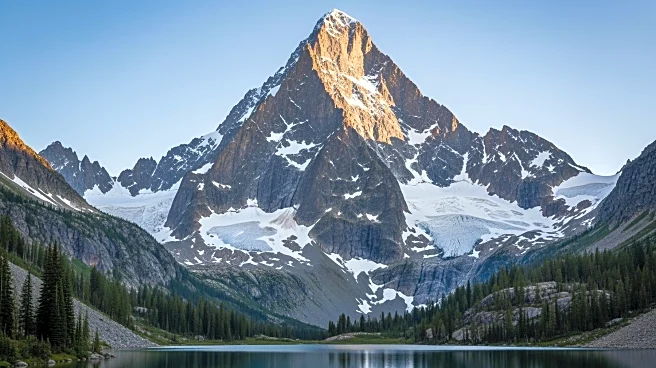




The Saint Elias Mountains are a breathtaking mountain range that spans across the Canadian province of British Columbia, the Yukon Territory, and the U.S. state of Alaska. Known for their towering peaks and rugged terrain, these mountains are the second highest range in both Canada and the United States, following the Alaska Range. This article delves into the geographical significance of the Saint Elias Mountains and their role in the natural landscape
of North America.
The Location and Extent of the Saint Elias Mountains
The Saint Elias Mountains stretch across a vast area, covering parts of British Columbia, the Yukon Territory, and Alaska. This range is notable for its impressive peaks, including Mount Saint Elias, which is the second-highest mountain in both Canada and the United States. The range's location on the border between Canada and the U.S. adds to its geographical significance, as it forms a natural boundary between the two countries.
The mountains are part of a larger system that includes the Wrangell Mountains and the Chugach Mountains, creating a continuous chain of peaks that dominate the landscape. The range's proximity to the Pacific Ocean influences its climate, contributing to the severe weather conditions that are characteristic of the area. The Saint Elias Mountains are not only a geographical marvel but also a critical component of the region's ecosystem.
The Peaks of the Saint Elias Mountains
Mount Saint Elias is the most prominent peak in the range, standing at an elevation of 18,008 feet. It is located on the border between the Yukon Territory and Alaska, making it a significant landmark in both countries. The mountain is part of Kluane National Park and Reserve on the Canadian side and Wrangell-St. Elias National Park and Preserve on the U.S. side, highlighting its importance in conservation efforts.
Other notable peaks in the range include Mount Logan, the highest mountain in Canada, and Mount Fairweather, which straddles the border between Alaska and British Columbia. These peaks are known for their challenging climbing conditions and stunning vistas, attracting adventurers and nature enthusiasts from around the world.
The Role of the Saint Elias Mountains in the Ecosystem
The Saint Elias Mountains play a crucial role in the region's ecosystem. The range's high peaks and glaciers contribute to the area's hydrology, feeding rivers and streams that support diverse wildlife. The mountains also act as a barrier to weather systems, influencing the climate patterns in the surrounding areas.
The range's unique geography and climate create habitats for a variety of plant and animal species, some of which are found nowhere else in the world. The protected areas within the range, such as Kluane National Park and Wrangell-St. Elias National Park, are vital for preserving these ecosystems and ensuring the survival of the species that depend on them.
In conclusion, the Saint Elias Mountains are a geographical wonder that offers insight into the natural beauty and complexity of North America's landscape. Their towering peaks, diverse ecosystems, and role as a natural boundary make them a significant feature of the continent's geography.