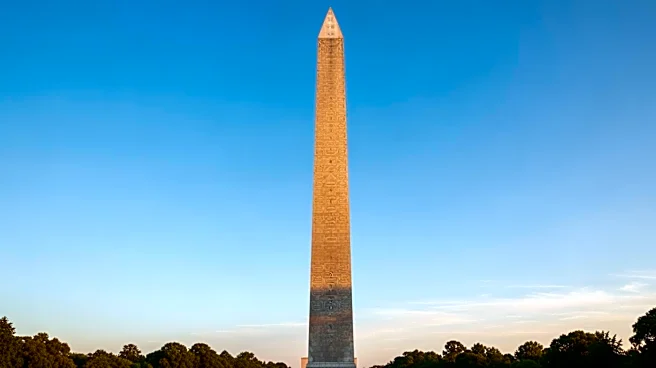

The Washington Monument, a towering obelisk on the National Mall in Washington, D.C., has a rich history that spans over a century. Completed in 1884, the monument was built to honor George Washington, the first
President of the United States. Its journey from conception to completion and beyond is a testament to the nation's dedication to preserving its history and honoring its leaders.
Construction and Completion
The idea for the Washington Monument was conceived in the early 19th century, with the goal of creating a fitting tribute to George Washington. Construction began in 1848, but the project faced numerous challenges, including funding issues and political disagreements. Despite these obstacles, the monument's construction continued, driven by the determination to honor Washington's legacy.
The monument was finally completed in 1884, standing at 555 feet tall. At the time, it was the tallest structure in the world, showcasing American engineering prowess. The completion of the monument marked a significant milestone in the nation's history, symbolizing the unity and strength of the United States.
Challenges and Restoration
Throughout its history, the Washington Monument has faced several challenges, including damage from natural disasters. In 2011, an earthquake caused significant damage to the structure, leading to its closure for repairs. The restoration process was extensive, requiring careful attention to preserve the monument's integrity.
The monument reopened in 2019, after years of repair work. This restoration effort highlighted the nation's commitment to maintaining its historical landmarks and ensuring their longevity. The monument's resilience in the face of adversity reflects the enduring spirit of the United States.
Modern-Day Significance
Today, the Washington Monument remains a prominent symbol of American history and values. It serves as a focal point for national celebrations and gatherings, drawing visitors from around the world. The monument's presence on the National Mall, surrounded by other iconic landmarks, underscores its importance as a symbol of national unity.
The monument's historical significance continues to inspire future generations, reminding them of the nation's journey from its founding to its present-day status as a global leader. As a testament to George Washington's legacy, the monument encourages Americans to strive for excellence and unity, embodying the enduring spirit of the nation.
The Washington Monument stands as a beacon of hope and progress, encouraging future generations to strive for excellence and unity. Its historical timeline reflects the nation's dedication to preserving its history and honoring its leaders, ensuring that the legacy of George Washington continues to inspire.