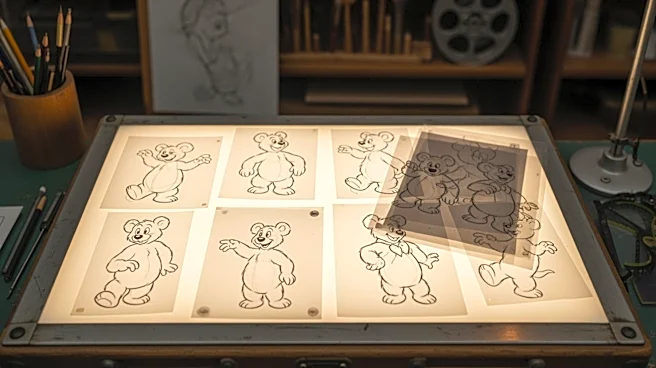







Barney Bear, the lovable and sleepy cartoon character, has been a significant part of animation history since his debut in 1939. Created by Rudolf Ising for MGM, Barney Bear's series of animated shorts spanned from 1939 to 1954, marking key milestones in the evolution of animated storytelling. This article explores the timeline of Barney Bear's journey through the world of animation.
The Early Years: 1939-1943
Barney Bear made his first appearance in "The Bear That Couldn't
Sleep" in 1939. This short film introduced audiences to Barney's character, a bear who often found himself in humorous situations while seeking peace and quiet. The early years of Barney Bear's series were marked by the creative direction of Rudolf Ising, who voiced the character from 1939 to 1943.
During this period, Barney Bear's cartoons gained popularity, with the fourth cartoon, "The Rookie Bear," receiving an Oscar nomination in 1941. This recognition highlighted the series' success and established Barney Bear as a prominent figure in the animation industry. However, Ising left the studio in 1943, leading to changes in the series' direction.
Mid-Series Developments: 1944-1949
Following Ising's departure, the series continued under the direction of George Gordon and later Preston Blair and Michael Lah. These directors brought their unique styles to the series, with Blair and Lah's work reflecting influences from Hanna-Barbera and Tex Avery. This period saw a shift in Barney Bear's design, with a more streamlined and simplified appearance.
The mid-series years also introduced new characters, such as Benny Burro, who appeared alongside Barney in several cartoons. Benny's inclusion added a new dynamic to the series, providing opportunities for fresh storylines and comedic interactions. Despite these changes, Barney Bear remained true to his core character traits, maintaining his pursuit of peace and quiet.
The Final Years and Legacy: 1950-1954
The last original Barney Bear cartoons were released between 1952 and 1954, directed by Dick Lundy. Lundy utilized Avery's unit to produce these final shorts, which continued to showcase Barney's adventures in a variety of settings. The series concluded in 1954, but Barney Bear's legacy endured.
In the years following the original series, Barney Bear made appearances in other media, including comic books and cameo roles in films. His influence extended beyond the screen, as he became a beloved character for audiences of all ages. Today, Barney Bear's cartoons are available on various home media platforms, allowing new generations to experience the charm and humor of this classic character.
Barney Bear's journey through animation history is a testament to the creativity and innovation of early animators. His enduring appeal and timeless adventures continue to captivate audiences, ensuring that Barney Bear remains a cherished figure in the world of animation.