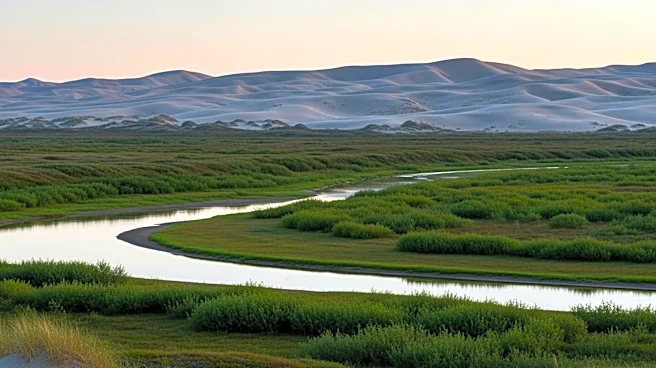








Kobuk Valley National Park, established in 1980, is not only a natural wonder but also a site of significant historical and cultural importance. Located in northwestern Alaska, the park preserves the rich history of human habitation that dates back at least 12,500 years. The Inupiat people, who have lived in the region for generations, continue to rely on the park's resources for subsistence hunting and fishing.
Ancient Human Habitation
The history of human habitation in Kobuk
Valley is long and varied. The first known inhabitants were people of the Paleo-Arctic tradition, who hunted caribou at Onion Portage, a site strategically located at a major caribou river crossing. This site, now a National Historic Landmark, documents nine cultural complexes spanning from 8,000–6,000 BC to about 1000–1700 AD.
Over the millennia, the region saw several waves of human occupation and abandonment. After the Paleo-Arctic people, the valley was deserted for about 2,000 years until the arrival of people from the Archaic tradition. Later, the Arctic Small Tool tradition people arrived, only to leave the valley again between 1,500 and 1,000 years ago. By 1200 AD, new groups had settled in the area, leaving behind evidence of their presence at sites like the Ahteut site, located 25 miles downriver from Onion Portage.
The Inupiat People and Subsistence Lifestyle
The present-day inhabitants of the Kobuk Valley are the Inupiat people, who have a deep connection to the land and its resources. The annual migration of the Western Arctic caribou herd is central to the Inupiat's subsistence lifestyle, as the herd crosses the Kobuk River during its migration between winter and summer grounds.
The Inupiat rely on the park's abundant wildlife for food, clothing, and other necessities. In addition to caribou, they hunt moose, fish for salmon and sheefish, and gather other resources from the land. The park's designation allows for subsistence hunting by local residents, ensuring that the Inupiat can continue their traditional way of life.
The Establishment of the National Park
Kobuk Valley National Park was established as part of the Alaska National Interest Lands Conservation Act (ANILCA) of 1980. Prior to its designation as a national park, the area was declared a national monument by President Jimmy Carter in 1978, using his authority under the Antiquities Act. This move was made to protect the region's unique natural and cultural resources while Congressional negotiations on the ANILCA bill were stalled.
The park's establishment as a national park ensures the preservation of its historical and cultural significance. Unlike many other Park Service units in Alaska, Kobuk Valley is entirely national park land, with no areas designated as a national preserve, which would allow sport hunting. This distinction helps protect the park's resources for future generations while respecting the traditional practices of the Inupiat people.