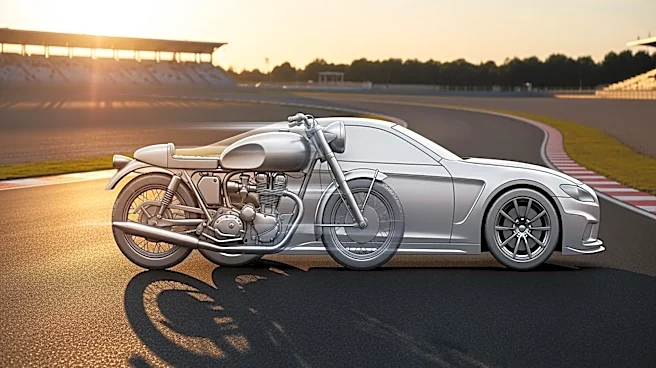



The Norisring, a street circuit in Nuremberg, Germany, has a rich history that dates back to 1947. Originally established as a motorcycle racing venue, it has evolved significantly over the decades. Today, it is known for hosting the Deutsche Tourenwagen Masters (DTM), a premier touring car racing series. This article explores the transformation of the Norisring from its early days to its current status as a key player in the world of motorsports.
Early Beginnings and Motorcycle Racing
The Norisring's journey began in 1947 when it was first used for motorcycle racing. The circuit was set up around the former Nazi Party rally grounds grandstand, known as the Zeppelinfeld. In 1950, the name Norisring was chosen through a competition, marking the beginning of its identity as a racing venue. During the early years, motorcycle racing was central to the circuit, with several manufacturers based in Nuremberg.
However, the motorcycle racing scene faced challenges, leading to a crisis in the industry. By 1958 and 1959, no racing events took place at the Norisring. Despite these setbacks, the circuit's potential for automobile racing was recognized, and it began hosting car races as early as 1948. This shift laid the groundwork for the Norisring's future as a prominent sports car racing venue.
Transition to Automobile Racing
The introduction of the Norisring Trophy in 1967 marked a turning point for the circuit. This event helped establish the Norisring as a significant sports car racing venue during the 1970s and 1980s. The circuit hosted popular sports prototype racing events, attracting large crowds and gaining international recognition.
In 1972, the track length was standardized to 2.3 km, featuring two hairpin turns and a chicane. This configuration has remained unchanged, providing a consistent challenge for drivers. The World Sportscar Championship events in 1986 and 1987 drew over 100,000 spectators, highlighting the Norisring's growing popularity.
The Rise of Touring Car Racing
By the late 1980s, the Norisring shifted its focus to touring car racing. The Deutsche Tourenwagen Masters (DTM) series, revived in 2000, became the circuit's most important event. The annual Norisringrennen, held in late June or early July, is a highlight of the DTM season, attracting between 100,000 and 140,000 spectators.
The Norisring's unique street circuit layout, combined with its location in a large city, offers fans an up-close experience with the action. The circuit's evolution from a motorcycle racing venue to a premier touring car racing destination reflects its adaptability and enduring appeal in the motorsports world.