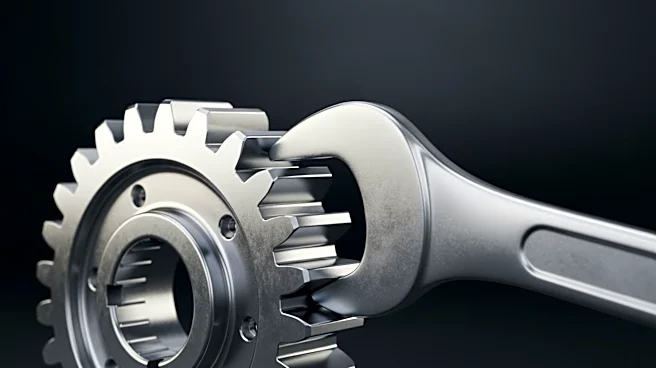






The concept of torque has a rich history, with its terminology evolving over time. Torque, also known as the moment of force, is a fundamental concept in physics and engineering, representing the tendency of a force to rotate an object around an axis. This article explores the historical development of torque and the evolution of its terminology.
Origins of Torque
The term torque is derived from the Latin word "torquēre," meaning "to twist." It was first suggested by
James Thomson and appeared in print in April 1884. The term was used by Silvanus P. Thompson in the first edition of "Dynamo-Electric Machinery," where he described torque as the entity that produces or tends to produce torsion around an axis.
Thompson emphasized the importance of using a term that treats the action of twisting as a single entity, rather than using terms like "couple" and "moment," which suggest more complex ideas. This simplification helped establish torque as a distinct concept in physics and engineering.
Evolution of Terminology
In mechanical engineering, particularly in the UK and the US, torque is often referred to as the moment of force, usually shortened to moment. This terminology can be traced back to Siméon Denis Poisson's "Traité de mécanique" in 1811. An English translation of Poisson's work appeared in 1842, further popularizing the term.
The use of the term moment in engineering reflects the focus on the rotational effect of forces, which is central to the design and analysis of mechanical systems. Despite the differences in terminology, the underlying concept of torque remains consistent across disciplines.
Impact on Modern Engineering
The historical development of torque has had a significant impact on modern engineering. The concept is now widely used in the design and analysis of mechanical systems, from engines and motors to tools and machinery. Engineers rely on torque to calculate the forces needed to achieve desired rotational effects, ensuring the efficiency and safety of their designs.
The evolution of torque terminology has also influenced the way engineers communicate and collaborate. By establishing a common language for discussing rotational forces, engineers can more effectively share ideas and solutions, driving innovation and progress in the field.
In summary, the historical development of torque and its terminology has shaped the way engineers understand and apply this fundamental concept. Its origins and evolution highlight the importance of clear communication and collaboration in advancing engineering knowledge and practice.