

The Artemis program, NASA's ambitious lunar exploration initiative, has a rich history that reflects the evolution of space exploration goals and technologies. Formally established in 2017, the program aims to return humans to the Moon and eventually pave the way for missions to Mars. This article explores the historical development of the Artemis program, highlighting key milestones and the legacy of past space missions that have shaped its trajectory.
Origins and Early Development
The Artemis program's roots can be traced back to earlier NASA initiatives, such as the Constellation program and the Asteroid Redirect Mission. The Constellation program, legislated by the NASA Authorization Act of 2005, aimed to develop new spacecraft and launch vehicles for lunar exploration. Although it was canceled in 2010, its components, including the Orion spacecraft, were integrated into the Artemis program.
In 2017, the Trump administration's Space Policy Directive 1 marked a turning point, officially establishing the Artemis program. This directive emphasized a U.S.-led effort to return humans to the Moon, leveraging commercial and international partnerships. The program was named Artemis, after the Greek goddess of the Moon, symbolizing a new era of exploration.
Key Milestones and Missions
The Artemis program is organized around a series of missions, each building on the success of the previous one. Artemis I, launched in November 2022, was an uncrewed mission that tested the Orion spacecraft and the Space Launch System (SLS). This mission set the stage for Artemis II, scheduled for early 2026, which will be the first crewed lunar flyby since Apollo 17.
Artemis III, planned for 2027, will be a historic mission, marking the first crewed lunar landing since 1972. Subsequent missions, such as Artemis IV and V, will focus on expanding the capabilities of the Lunar Gateway and establishing a sustainable presence on the Moon. These missions will involve international partners, including the European Space Agency and the Canadian Space Agency.
Challenges and Future Prospects
Despite its ambitious goals, the Artemis program faces several challenges, including budget constraints and technical hurdles. The program's reliance on legacy systems, such as the Space Shuttle engines, has been criticized for sustainability concerns. Additionally, the economics of space launch have shifted with the advent of reusable launch vehicles, prompting debates about the program's viability.
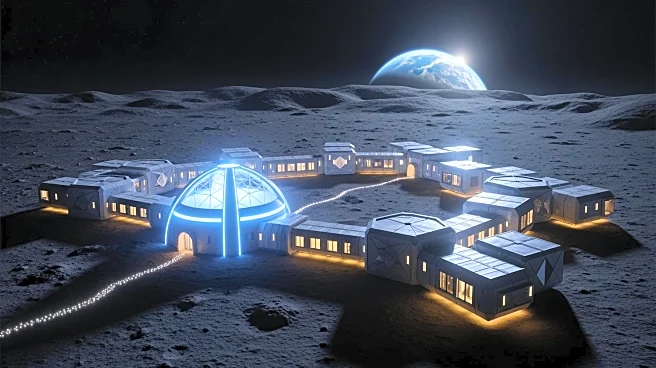
Looking ahead, the Artemis program represents a bold vision for the future of space exploration. By establishing a permanent base on the Moon, NASA aims to unlock new scientific discoveries and lay the groundwork for human exploration of Mars. As the program progresses, it will continue to inspire a new generation of explorers and scientists, eager to push the boundaries of human knowledge and capability.