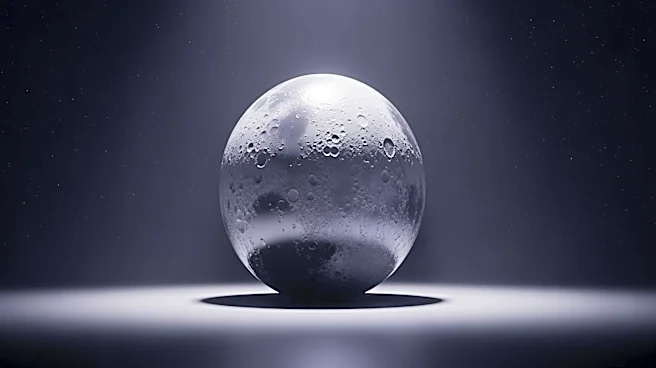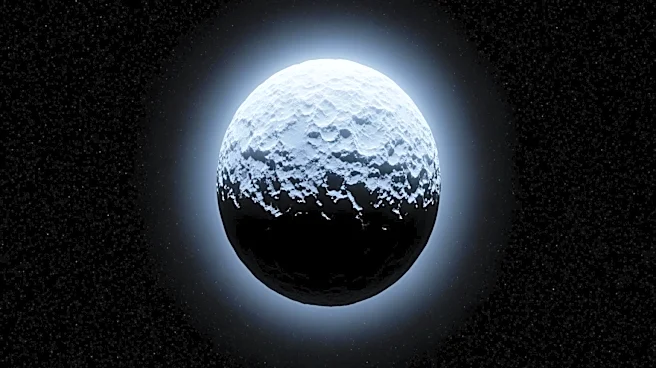

2 Pallas is a fascinating celestial body that holds a significant place in the history of astronomy. Discovered in the early 19th century, it was only the second asteroid to be identified, following Ceres. Named after the Greek goddess Athena, 2 Pallas has intrigued scientists with its unique characteristics and its role in the asteroid belt. This article delves into the discovery of 2 Pallas and its scientific importance.
The Discovery of 2 Pallas
The story of 2 Pallas begins
with its discovery by the German astronomer Heinrich Wilhelm Olbers on March 28, 1802. At the time, the discovery of asteroids was a novel event, and 2 Pallas was only the second such body to be identified, following the discovery of Ceres by Giuseppe Piazzi in 1801. Olbers stumbled upon 2 Pallas while attempting to locate Ceres, which had been lost from sight for several months. The discovery of 2 Pallas was a significant milestone in astronomy, as it confirmed the existence of more celestial bodies in the gap between Mars and Jupiter, a region where astronomers had speculated a planet might exist.
Initially, 2 Pallas, like Ceres, was considered a planet. However, as more asteroids were discovered, it became clear that these bodies were distinct from the major planets. This led to the eventual classification of these objects as asteroids, a term that better reflected their nature. The discovery of 2 Pallas and other asteroids contributed to the understanding of the solar system's formation and the processes that led to the creation of planets.
Scientific Characteristics of 2 Pallas
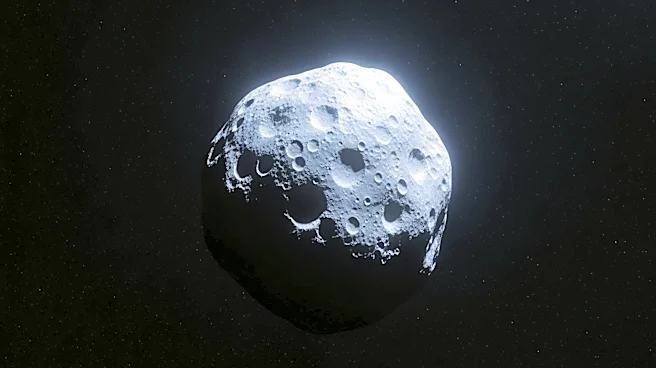
2 Pallas is notable for its size and composition. It is the third-largest asteroid in the solar system by volume and mass, following Ceres and Vesta. Its mass constitutes about 7% of the total mass of the asteroid belt. The asteroid's composition is believed to be similar to carbonaceous chondrite meteorites, though it is significantly less hydrated than Ceres. This composition suggests that 2 Pallas, like Ceres, is a remnant protoplanet, providing valuable insights into the early solar system.
The surface of 2 Pallas is primarily composed of silicate materials, with minerals such as olivine and pyroxene. These minerals are found in CM chondrules, and the surface composition is similar to the Renazzo carbonaceous chondrite meteorites. The asteroid's visible and near-infrared spectrum is almost flat, with a slight brightness towards the blue, indicating an anhydrous component mixed with hydrated silicates.
The Role of 2 Pallas in Astronomy
The discovery and study of 2 Pallas have played a crucial role in advancing our understanding of the solar system. As one of the largest asteroids, it provides a unique opportunity to study the characteristics and composition of early solar system bodies. The asteroid's high orbital inclination and eccentricity make it a challenging target for spacecraft, but its study continues to yield valuable information.
In conclusion, 2 Pallas is a significant celestial body that has contributed to our understanding of the solar system's formation and evolution. Its discovery marked a pivotal moment in astronomy, and its study continues to provide insights into the nature of asteroids and protoplanets.