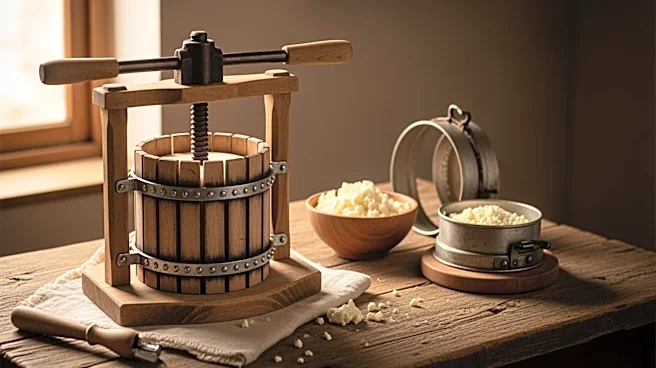







Cheesemaking is an ancient craft that has evolved significantly over the millennia. From its accidental discovery to the sophisticated processes used today, the methods of making cheese have been refined and adapted to suit different tastes and needs. This article explores the evolution of cheesemaking techniques, highlighting key developments and innovations that have shaped the industry.
Early Cheesemaking Practices
The earliest cheesemaking likely occurred by accident when
milk was stored in containers made from animal stomachs. The rennet in the stomach lining would cause the milk to curdle, separating into curds and whey. This accidental discovery laid the foundation for intentional cheesemaking, as people began to replicate the process to preserve milk.
In ancient times, cheesemaking was a simple process involving the curdling of milk, draining the whey, and pressing the curds into molds. The use of salt as a preservative was common, and early cheesemakers experimented with different methods to improve the texture and flavor of their products. The Greeks and Romans made significant contributions to cheesemaking, with the latter developing techniques for aging and flavoring cheese.
Industrialization and Standardization
The industrial revolution brought about significant changes in cheesemaking. The first factory for industrial cheese production opened in Switzerland in 1815, but it was in the United States that large-scale production truly took off. In 1851, Jesse Williams, a dairy farmer from New York, began making cheese using an assembly-line process, marking the beginning of modern industrial cheesemaking.
The development of mass-produced rennet in the 1860s and pure microbial cultures by the turn of the century allowed for more standardized cheese production. These innovations enabled cheesemakers to produce consistent products with predictable flavors and textures. Factory-made cheese quickly overtook traditional methods, becoming the dominant form of production in the 20th century.
Modern Innovations and Techniques
Today, cheesemaking continues to evolve with advancements in technology and science. Modern factories use sophisticated equipment to control every aspect of the process, from pasteurization to aging. Vacuum packaging and gas-flushing techniques have extended the shelf life of cheese, allowing it to be distributed globally.
Despite the dominance of industrial production, artisanal cheesemaking has experienced a resurgence in recent years. Small-scale producers are reviving traditional methods and experimenting with new flavors and techniques. This blend of old and new ensures that cheesemaking remains a dynamic and evolving craft, with a rich history and a promising future.
As cheesemaking techniques continue to develop, the diversity and quality of cheese available to consumers will only increase, offering endless possibilities for cheese lovers around the world.