
Lunar eclipses are fascinating celestial events that capture the imagination of people around the world. Unlike solar eclipses, which are brief and can only be seen from specific locations, lunar eclipses are visible
from anywhere on the night side of Earth and can last for over an hour. This article explores the basic mechanics of lunar eclipses, the different types that occur, and why they are safe to observe.
The Mechanics of a Lunar Eclipse
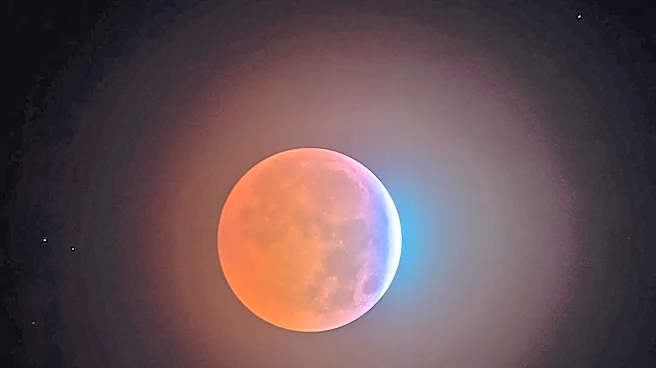
A lunar eclipse occurs when the Moon passes through Earth's shadow. This can only happen during a full moon when the Sun, Earth, and Moon are aligned in a straight line. The Earth's shadow consists of two parts: the umbra, where the Earth completely blocks the Sun's light, and the penumbra, where the Sun's light is only partially blocked. When the Moon moves into the umbra, a total lunar eclipse occurs, causing the Moon to appear a deep red or orange color.
The reddish hue of the Moon during a total eclipse is due to Rayleigh scattering. As sunlight passes through Earth's atmosphere, shorter wavelengths like blue and violet are scattered out, leaving the longer red wavelengths to illuminate the Moon. This is the same effect that causes sunsets to appear red. The duration and type of a lunar eclipse depend on the Moon's proximity to the lunar node, the point where the Moon's orbit crosses the ecliptic plane.
Types of Lunar Eclipses
There are three main types of lunar eclipses: penumbral, partial, and total. A penumbral eclipse occurs when the Moon passes through the Earth's penumbral shadow, resulting in a subtle dimming of the Moon's surface. These eclipses are often difficult to observe without precise instruments.
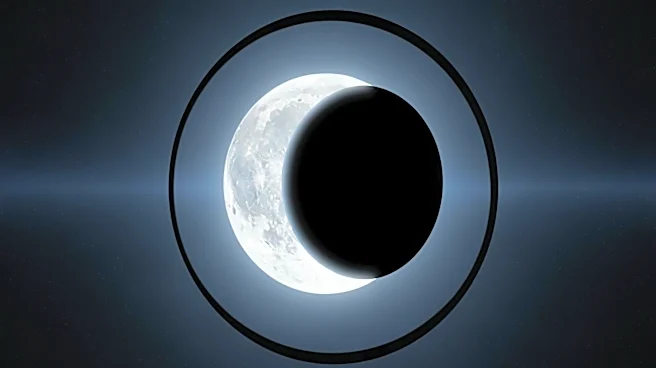
A partial lunar eclipse happens when only a portion of the Moon enters the Earth's umbra. During this type of eclipse, part of the Moon appears darkened while the rest remains illuminated. The most dramatic type is the total lunar eclipse, where the entire Moon passes through the umbra, taking on a reddish color. Total lunar eclipses can last up to 107 minutes, but the entire event, from start to finish, can last several hours.
Observing Lunar Eclipses
One of the most appealing aspects of lunar eclipses is that they are safe to observe with the naked eye. Unlike solar eclipses, which require special glasses to prevent eye damage, lunar eclipses pose no risk to viewers. This makes them accessible to anyone with a clear view of the night sky.
Lunar eclipses occur during eclipse seasons, which happen roughly every six months. During these times, the Sun is near one of the Moon's nodes, allowing for the possibility of an eclipse. While not as rare as solar eclipses, lunar eclipses are still special events that offer a unique opportunity to witness the dynamics of our solar system in action.