

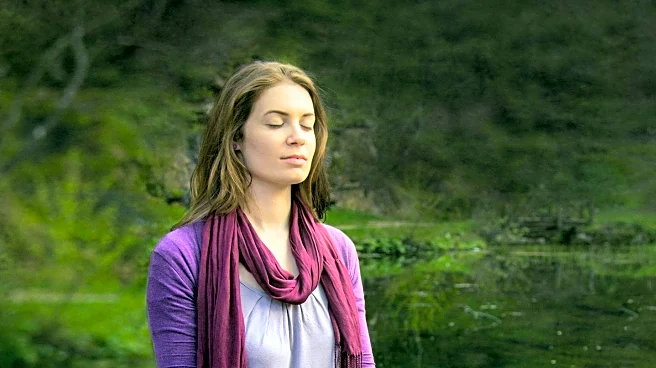
Pranayama, the art of breath control, is a fundamental aspect of yoga that has been practiced for centuries. It is deeply rooted in Hindu philosophy and is considered one of the eight limbs of yoga as outlined in the Yoga Sutras of Patanjali. This article delves into the historical and philosophical significance of pranayama, highlighting its evolution and role in classical yoga.
Historical Roots of Pranayama
Pranayama is mentioned in ancient Hindu texts such as the Upanishads
and the Bhagavad Gita, where it is associated with the life energy, or prana. In these texts, pranayama is described as a method to stabilize the mind and achieve a higher state of consciousness. The practice involves techniques like exhalation and breath retention, which are aimed at controlling the mind and complementing meditation.
The 15th-century Hatha Yoga Pradipika is a key text that elaborates on various forms of pranayama, including Kumbhaka breath retention and body locks known as Bandhas. These practices were integral to the Hatha yoga tradition, which emphasized the suspension of breath as a means to attain spiritual enlightenment.
Philosophical Significance
In the Yoga Sutras of Patanjali, pranayama is the fourth limb of Ashtanga Yoga. Patanjali discusses pranayama as a practice that supports advanced practitioners in gaining control over the mind. The ultimate aim is to achieve a light body and steady mind by regulating breath, which is seen as a pathway to spiritual liberation.
The Bhagavad Gita also highlights the importance of breath restraint, describing it as a sacrifice that leads to a trance-like state. This philosophical approach underscores the belief that controlling the breath can lead to a cessation of all breathing, a state that is considered conducive to achieving moksha, or liberation.
Modern Interpretations and Practices
In modern yoga, pranayama has evolved to include synchronizing breath with movements between asanas. This approach differs significantly from the classical tradition, where the focus was on complete cessation of breathing. Despite these changes, the core philosophy of pranayama as a tool for mental and spiritual development remains intact.
Yoga teachers like B.K.S. Iyengar have emphasized that pranayama should be practiced as part of a holistic yoga routine, incorporating other limbs of Raja Yoga such as Yama, Niyama, and Asana. This integration reflects the enduring significance of pranayama in both traditional and contemporary yoga practices.
Pranayama continues to be a vital component of yoga, offering practitioners a means to connect with their inner selves and achieve a balanced state of mind. Its historical roots and philosophical depth make it a practice that transcends time, adapting to the needs of modern yogis while preserving its ancient wisdom.