



Gerrymandering is a term that has become synonymous with political manipulation, but its origins are deeply rooted in the early 19th century. The practice involves the strategic drawing of electoral district boundaries to favor specific political interests, often resulting in oddly shaped districts. The term itself was coined in 1812, following a controversial redistricting in Massachusetts under Governor Elbridge Gerry. This article delves into the historical
context and development of gerrymandering, highlighting its inception and the political climate that fostered its creation.
The Birth of Gerrymandering
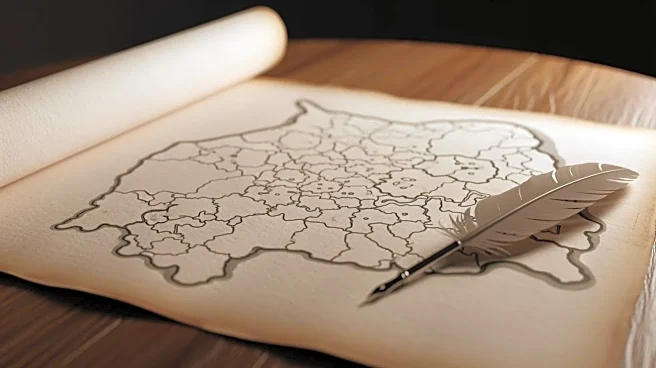
The term "gerrymandering" originated from a redistricting effort in Massachusetts in 1812. Governor Elbridge Gerry signed a bill that redrew the state's senate election districts to benefit his Democratic-Republican Party. One of the districts was shaped so bizarrely that it was likened to a salamander, leading to the portmanteau "Gerry-mander." This redistricting was a strategic move to maintain political power, despite Gerry's personal disapproval of the practice.
The political cartoon that accompanied the term's creation depicted the district as a dragon-like creature, emphasizing its unnatural shape. This visual representation helped spread the term and concept across Massachusetts and beyond, marking the beginning of gerrymandering as a recognized political strategy.
Political Climate and Motivations
The early 19th century was a period of intense political rivalry in the United States. The Democratic-Republican Party, led by figures like Thomas Jefferson and James Madison, was in a fierce battle with the Federalists. The redistricting in Massachusetts was a direct response to this rivalry, aiming to secure a political advantage by manipulating electoral boundaries.
Governor Gerry's decision to sign the redistricting bill was influenced by the desire to maintain his party's control over the state senate, even as the governorship and state house were won by Federalists. This strategic manipulation of district boundaries was seen as a necessary measure to counteract the shifting political tides and ensure continued influence.
Legacy and Impact
The practice of gerrymandering has evolved significantly since its inception in 1812. It has become a common tool in political strategy, used by parties to maximize their electoral advantages. The term itself has gained negative connotations, often associated with corruption and the undermining of democratic processes.
Despite its controversial nature, gerrymandering remains a prevalent issue in modern politics, with debates surrounding its ethical implications and impact on representation. The historical roots of gerrymandering serve as a reminder of the enduring challenges in achieving fair and equitable electoral systems.
The legacy of Elbridge Gerry's redistricting efforts continues to influence political discourse, highlighting the complex interplay between power, representation, and democracy.