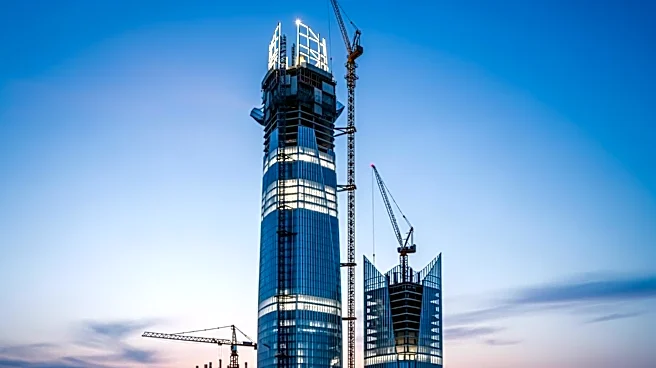

The Willis Tower, originally known as the Sears Tower, stands as a testament to architectural innovation and engineering prowess. This iconic skyscraper in Chicago, Illinois, was once the tallest building
in the world. Its construction journey, marked by challenges and triumphs, offers a fascinating glimpse into the world of skyscraper development.
Early Construction Challenges
The construction of the Willis Tower began in August 1970, with the foundation work marking the initial phase. Contractors faced the daunting task of excavating the site to a depth of 50 feet, removing a significant amount of dirt. This was no small feat, as the site was bound by Franklin Street, Jackson Boulevard, Wacker Drive, and Adams Street, making logistics a challenge. The excavation process involved creating a trench around the site, which was then reinforced with a slurry wall made of concrete and steel.
As the foundation work progressed, the construction team encountered another challenge: rerouting a sewer that ran underneath Quincy Street. This was necessary because Quincy Street was to be permanently closed as part of the tower's construction. Despite these hurdles, the foundation work was completed, setting the stage for the tower's superstructure.
Building the Superstructure
The superstructure of the Willis Tower began to take shape in 1971, with the installation of the first steel beam. The construction process was a massive undertaking, employing around 2,000 workers. To expedite the building process, a concrete plant was established in the building's basement, allowing for rapid pouring of concrete floors. This innovative approach enabled the construction team to pour one-third of a concrete floor every day.
The construction of the steel frame was a significant milestone. By February 1973, the superstructure had reached the 100th floor, surpassing the height of the Empire State Building. This achievement marked the Willis Tower as the tallest building in the world at that time. However, the construction process was not without its setbacks. Labor strikes and adverse weather conditions caused delays, but the project continued to move forward.
Completion and Legacy
The Willis Tower was officially topped out on May 3, 1973, marking the completion of its steel frame. Despite the challenges faced during construction, the building was completed at a cost of approximately $150 million. The tower's completion was a significant achievement, not only for the city of Chicago but also for the field of architecture and engineering.
The Willis Tower's construction journey is a story of innovation, perseverance, and triumph over adversity. It stands today as a symbol of Chicago's architectural heritage and continues to be a major tourist attraction, drawing millions of visitors to its Skydeck each year.