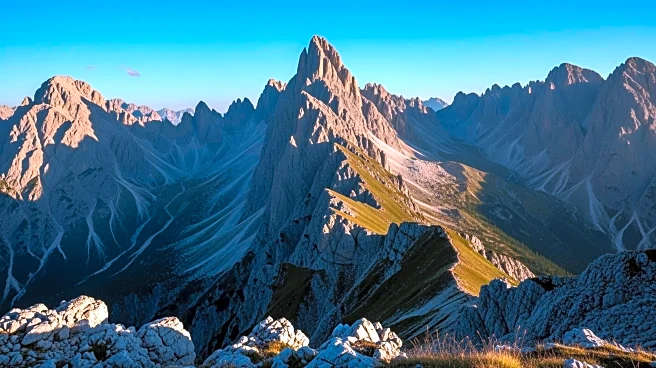




When it comes to mountains, prominence is a key factor that sets certain peaks apart from others. This article takes a closer look at some of the world's most prominent mountain peaks, exploring their significance and what makes them stand out in the realm of topography. From Mount Everest to Denali, these peaks are not only tall but also remarkably distinct in their landscapes.
Mount Everest: The Pinnacle of Prominence
Mount Everest, located in the Himalayas, is the most prominent mountain
peak in the world. With a prominence of 8,848.86 meters, it is not only the highest peak by elevation but also the most distinct. Everest's prominence is unmatched, as there is no higher peak from which it can be climbed. This makes it a unique landmark, both geographically and symbolically.
The prominence of Mount Everest underscores its status as a global icon. It is a peak that has captured the imagination of adventurers and mountaineers for decades. Its towering presence and the challenge it presents have made it a symbol of human endeavor and exploration.
Aconcagua and Denali: Giants of the Americas
Following Mount Everest, Aconcagua in the Andes and Denali in the Alaska Range are the second and third most prominent peaks, respectively. Aconcagua, with a prominence of 6,960.8 meters, is the highest peak in South America. Its prominence highlights its dominance in the Andes, making it a significant peak in the region.
Denali, also known as Mount McKinley, has a prominence of 6,155 meters. It is the highest peak in North America and stands out as a prominent feature in the Alaskan landscape. Denali's prominence is a testament to its grandeur and the awe it inspires in those who witness its majesty.
The Global Distribution of Prominent Peaks
The list of the world's most prominent peaks includes 125 summits, with a notable concentration in regions like Indonesia, China, and the United States. These areas are characterized by diverse and dramatic landscapes, contributing to the prominence of their peaks.
Understanding the distribution of prominent peaks provides insight into the geological forces that shape our planet. It highlights regions of significant elevation and topographical variation, offering a glimpse into the natural beauty and complexity of the Earth's surface.
In conclusion, the world's most prominent peaks are not only defined by their height but also by their distinctiveness in the landscape. These peaks are landmarks of natural beauty and serve as symbols of the Earth's diverse topography.