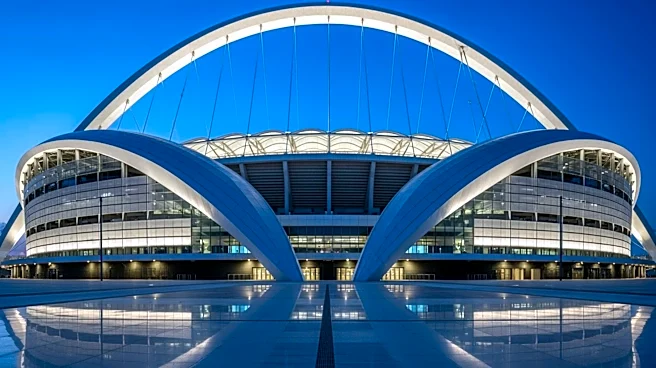







Stade de France, located in Saint-Denis, just outside Paris, is not only a hub for major sports events but also an architectural marvel. Opened in 1998, this stadium stands as a testament to modern engineering and design. With a seating capacity of 80,698, it is the largest stadium in France and serves as a multipurpose venue for various events. This article delves into the architectural features and construction process that make Stade de France a unique
structure.
Design and Construction
The design of Stade de France was inspired by the Worldport terminal of Pan Am at JFK Airport in New York. The stadium's architecture is characterized by its floating roof, which is suspended by cables and supported by 18 masts. This design not only provides an unobstructed view for spectators but also gives the stadium its distinctive appearance. The roof covers an area of six hectares and weighs 13,000 tons, equivalent to two Eiffel Towers.
Construction of the stadium began in 1995, with the first stone laid by Alain Juppé. The project was completed in a record time of 31 months, showcasing the efficiency and expertise of the construction teams. The use of advanced techniques in both public works and building construction was crucial in meeting the tight deadline. The stadium's rapid construction involved 800,000 square meters of earthworks and 180,000 cubic meters of concrete.
Multifunctional Features
Stade de France was designed to be a multifunctional venue, capable of hosting a variety of events. Its retractable stands allow for quick reconfiguration, making it suitable for both athletics and team sports like football and rugby. This flexibility was a key consideration during the design phase, ensuring the stadium could accommodate different types of events without compromising on spectator experience.
The stadium's interior is equipped with state-of-the-art facilities, including spacious locker rooms, media centers, and VIP lounges. These features enhance the functionality of the venue, making it a preferred choice for international events. The design also includes a sophisticated evacuation system, allowing 80,000 spectators to exit the stadium in just seven minutes.
Impact on Urban Development
The construction of Stade de France played a significant role in the urban development of the Saint-Denis area. The project included the creation of new infrastructure, such as RER stations and road improvements, which have improved accessibility to the region. The stadium has also attracted businesses and cultural institutions, contributing to the economic revitalization of the area.
Overall, Stade de France is not just a sports venue but a symbol of modern architecture and urban development. Its innovative design and construction have set a benchmark for stadiums worldwide, making it a landmark in the world of sports and architecture.