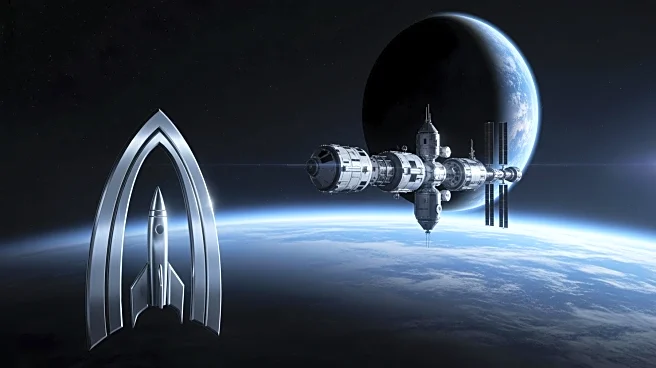

The AS-103 mission, launched in 1965, marked a significant milestone in the field of spacecraft aerodynamics and micrometeoroid investigation. As the third orbital flight test of a boilerplate Apollo spacecraft,
AS-103 was pivotal in demonstrating the functional operations of mechanical, structural, and electronic systems in space. This mission also introduced the Pegasus satellite, designed to evaluate meteoroid data sampling in near-Earth orbit, setting the stage for future advancements in space exploration.
Mission Objectives and Launch
The AS-103 mission had twelve flight objectives, focusing on both the Pegasus satellite and the launch vehicle systems. Two objectives were dedicated to the Pegasus satellite, aiming to demonstrate its functional operations and evaluate meteoroid data sampling. The remaining objectives concentrated on the performance of the launch vehicle systems, including the jettisoning of the launch escape system and the separation of the boilerplate spacecraft.
The launch took place on February 16, 1965, from Cape Kennedy Launch Complex 37B. Despite a power failure causing a hold of over an hour, the launch proceeded successfully. The spacecraft was inserted into orbit approximately 10.5 minutes after launch, with the Pegasus satellite enclosed within the service module, attached to the S-IV stage. This successful launch was crucial in achieving the mission's objectives and advancing the understanding of spacecraft aerodynamics.
Achievements in Spacecraft Aerodynamics
The AS-103 mission was instrumental in advancing the field of spacecraft aerodynamics. The trajectory and space-fixed velocity were nearly as planned, demonstrating the effectiveness of the launch vehicle systems. The Apollo shroud separated from the Pegasus satellite about 804 seconds after lift-off, and the deployment of two meteoroid detection panel wings commenced shortly thereafter.
These achievements highlighted the mission's success in meeting its objectives, providing valuable data on the functional operations of spacecraft systems in orbit. The successful deployment and operation of the Pegasus satellite further underscored the mission's contributions to the field of spacecraft aerodynamics.
Long-term Impact and Legacy
The AS-103 mission had a lasting impact on space exploration, with the Pegasus satellite remaining in orbit until 1985. Although minor malfunctions occurred, the mission was deemed a success, meeting all its objectives. The data collected from the Pegasus satellite contributed to the understanding of micrometeoroid environments in near-Earth orbit, paving the way for future missions.
The mission's success demonstrated the viability of using boilerplate spacecraft for testing and provided insights into the performance of launch vehicle systems. AS-103's legacy continues to influence spacecraft design and aerodynamics, highlighting the importance of thorough testing and evaluation in advancing space exploration.