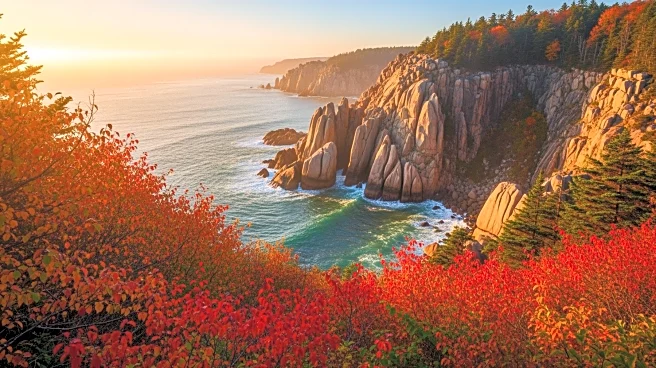




Acadia National Park, located on the coast of Maine, is a testament to the rich history and natural beauty of the northeastern United States. Established in the early 20th century, the park has become a beloved destination for millions of visitors each year. This article delves into the historical development of Acadia National Park, highlighting its key milestones and the individuals who played pivotal roles in its creation.
Early Beginnings and Establishment
The history of Acadia
National Park dates back to the early 1900s when conservationists began to recognize the need to preserve the natural beauty of Mount Desert Island. George B. Dorr, often referred to as the "Father of Acadia National Park," was instrumental in the park's establishment. Dorr, along with Charles W. Eliot, worked tirelessly to acquire land and advocate for the park's creation.
In 1916, President Woodrow Wilson proclaimed the area as Sieur de Monts National Monument, marking the first step towards its national park status. Just a few years later, in 1919, the monument was redesignated as Lafayette National Park, becoming the first national park east of the Mississippi River. The park was renamed Acadia National Park in 1929, honoring the former French colony of Acadia.
Contributions of John D. Rockefeller Jr.
One of the most significant contributions to Acadia National Park came from philanthropist John D. Rockefeller Jr. Between 1915 and 1940, Rockefeller financed and directed the construction of a network of carriage roads throughout the park. These roads, designed to blend seamlessly with the natural landscape, provided visitors with a unique way to explore the park's beauty.
Rockefeller's vision extended beyond the roads themselves. He also sponsored the landscape architect Beatrix Farrand to design the planting plans for the carriage roads, ensuring that the park's natural beauty was preserved and enhanced. Today, these carriage roads remain a popular attraction, offering visitors a glimpse into the park's history and Rockefeller's legacy.
Modern Developments and Preservation Efforts
In recent years, Acadia National Park has continued to evolve, with efforts focused on preserving its natural beauty and accommodating the growing number of visitors. The park's visitation has steadily increased, with a record 4.07 million visitors in 2021. This growth has prompted the National Park Service to implement measures to manage traffic and protect the park's delicate ecosystems.
The Friends of Acadia, a nonprofit organization, has played a crucial role in supporting the park's preservation efforts. Through volunteerism and private philanthropy, the organization has helped maintain the park's trails, carriage roads, and other infrastructure. As Acadia National Park continues to thrive, its rich history and ongoing preservation efforts ensure that it remains a cherished destination for generations to come.