



The Young Abe Lincoln statue, crafted by David K. Rubins, stands as a testament to the artistic process and the vision of its creator. Installed in 1962 at the Indiana Statehouse in Indianapolis, this bronze sculpture captures a youthful Abraham Lincoln, reflecting both his formative years in Indiana and the artist's interpretation of his character. This article delves into the creation process and the artistic choices that shaped this iconic piece.
The Artistic Vision
David K. Rubins, inspired by Lincoln's life and legacy, embarked on a journey to create a sculpture that would encapsulate the essence of a young Lincoln. Rubins' vision was to portray Lincoln with "vital energy, lean physical strength, and a tree-like growth suggestive of strong roots of character." This vision was realized through the depiction of Lincoln as an adolescent, barefoot and holding a book, symbolizing his intellectual curiosity and humble beginnings.
Rubins' approach to the sculpture was not just about physical likeness but also about capturing the spirit of Lincoln's early years. He aimed to express the "rough warmth of his frontier humanity" and the "ungainliness of his bony frame," which he believed were integral to Lincoln's character. The artist's choice to leave Lincoln shirtless and barefoot was a deliberate decision to emphasize the simplicity and rawness of his early life.
The Sculptural Process
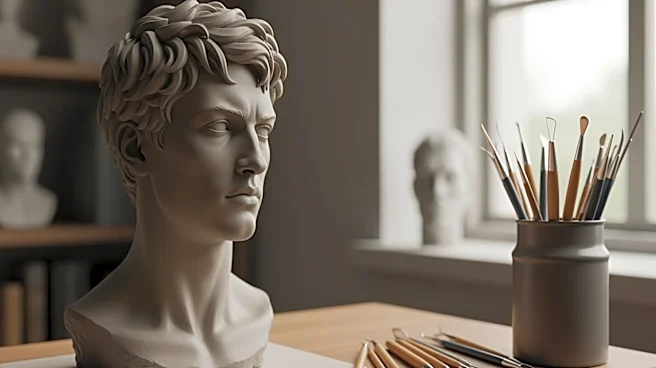
The creation of the Young Abe Lincoln statue involved meticulous planning and execution. Rubins began with a forty-six-inch plaster model, which served as the basis for the full-sized sculpture. Using a three-dimensional pantograph, a rough, hollow framework was constructed from wood. This framework was then covered with plastelene, a non-hardening clay, allowing Rubins to refine the details by hand.
Once the clay model was complete, a plaster mold was created, which was then used to produce a positive plaster cast. This cast was a replica of the clay model and served as the final step before the bronze casting. The lost-wax casting method, a traditional technique, was employed to create the bronze sculpture, a process that took over five months to complete.
The Final Installation
The Young Abe Lincoln statue was installed outside the Indiana Government Center, where it continues to be a focal point for visitors. The sculpture's placement among trees was intentional, reflecting Lincoln's connection to the Indiana landscape. Rubins believed that placing the statue in the open plaza would detract from its human scale, opting instead for a more intimate setting.
Rubins' work on Young Abe Lincoln is a testament to his dedication to capturing the essence of one of America's most revered figures. Through careful planning and execution, he created a piece that not only honors Lincoln's legacy but also invites viewers to reflect on the qualities that defined his early years.