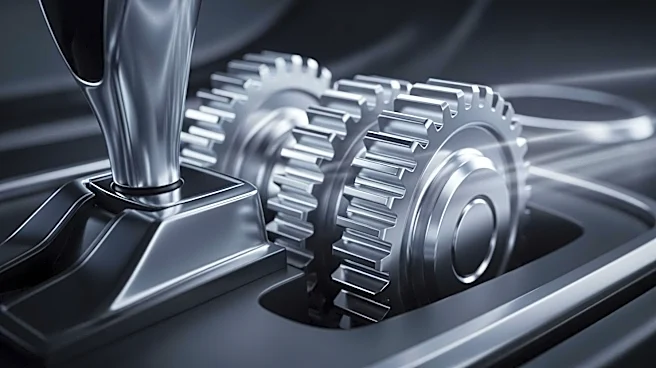


Dual-clutch transmissions (DCTs) have revolutionized the automotive industry by offering a blend of performance and efficiency. This transmission system, which uses two separate clutches for odd and even gear sets, has evolved significantly since its inception. From its early days in racing cars to its widespread use in modern vehicles, the journey of DCTs is a testament to innovation in automotive engineering.
Early Beginnings
The concept of a dual-clutch transmission
was first introduced by French engineer Adolphe Kégresse in 1939. Although Kégresse intended to use this technology in the Citroën Traction Avant, financial constraints prevented the development of a working model. It wasn't until the late 1950s that the first production DCT, known as the Easidrive, was developed by Smiths Industries and Rootes in the United Kingdom. This early version used electro-magnetic clutches and analogue electronics to shift gears, but it was not reliable and was eventually replaced by conventional manual transmissions.
Porsche began exploring DCTs for racing applications in the late 1970s. The technology was appealing for turbocharged engines, as it could prevent a drop in boost during gear shifts. By 1983, Porsche had installed a prototype DCT in a 956 Le Mans racing car, and by 1985, the Porsche 962 C Le Mans racing car was using the DCT in competition, achieving significant success.
Modern Era and Mass Production
The modern era of DCTs began with the 2003 Volkswagen Golf R32, which was the first mass-production passenger car to feature this technology. Volkswagen's introduction of the DCT marked a turning point, as it demonstrated the potential for DCTs to replace traditional automatic transmissions in consumer vehicles. The Volkswagen Group's DCTs, marketed as Direct-Shift Gearbox (DSG), quickly gained popularity for their ability to provide smooth and efficient gear changes without driver input.
Since the late 2000s, DCTs have become increasingly common in a variety of vehicles, from high-performance sports cars to everyday sedans. Manufacturers like BorgWarner and Getrag have played significant roles in producing DCTs for major automotive brands, including Volkswagen, Audi, and Ford.
Impact on the Automotive Industry
The adoption of DCTs has had a profound impact on the automotive industry. By offering faster and smoother gear shifts compared to traditional manual and automatic transmissions, DCTs have enhanced vehicle performance and fuel efficiency. This has made them particularly attractive for high-performance vehicles, where every millisecond counts.
Moreover, the versatility of DCTs has allowed them to be used in a wide range of applications, from motorcycles to trucks. As technology continues to advance, DCTs are likely to become even more prevalent, further shaping the future of automotive design and engineering. The journey of dual-clutch transmissions is a remarkable example of how innovation can transform an industry, providing drivers with a superior driving experience.