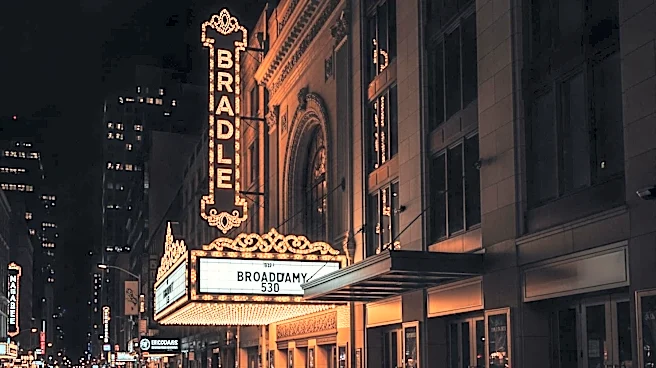

The Broadway Theatre on 53rd Street in Manhattan has a rich history that reflects the evolution of theater in New York City. Originally opened in 1924, this venue has undergone numerous transformations,
both in its physical structure and its role in the theater community. From its beginnings as a movie theater to its current status as a prominent Broadway venue, the Broadway Theatre has been a significant part of the city's cultural landscape.
Early Years and Initial Purpose
The Broadway Theatre was initially opened as B.S. Moss's Colony Theatre on Christmas Day in 1924. Designed by Eugene De Rosa, it was originally intended to serve as a movie theater. The theater's facade was crafted in the Italian Renaissance style, featuring brick and terracotta materials. This design choice was typical of the era, aiming to provide an opulent experience for moviegoers.
In 1930, the theater was renovated and reopened as the Broadway Theatre, shifting its focus from films to legitimate theater productions. This transition marked the beginning of its journey as a venue for live performances, a role it would continue to embrace in the decades to come.
Mid-Century Changes and Challenges
Throughout the 1930s and 1940s, the Broadway Theatre experienced several changes in management and purpose. It alternated between hosting live shows, movies, and vaudeville acts. The Shubert family acquired the theater in 1940, solidifying its status as a legitimate theater venue. Despite brief periods of showing films, the Broadway Theatre primarily focused on live performances, hosting notable productions such as "Carmen Jones" and "Lady in the Dark."
The theater faced challenges during the Great Depression and World War II, but it managed to survive and thrive, thanks in part to its strategic location in the Theater District of Midtown Manhattan. The post-war era saw a resurgence in theater popularity, and the Broadway Theatre was well-positioned to capitalize on this renewed interest.
Modern Renovations and Continued Success
In the late 20th century, the Broadway Theatre underwent significant renovations to modernize its facilities and accommodate larger productions. A major renovation in 1986 redecorated the auditorium in a reddish color scheme, enhancing its visual appeal. The theater's capacity and stage size made it an attractive venue for large-scale musicals, leading to successful runs of shows like "Les Misérables" and "Miss Saigon."
Today, the Broadway Theatre continues to be a vital part of New York City's theater scene. Its ability to adapt to changing times and tastes has ensured its longevity and success. As a venue that has hosted both historic productions and modern hits, the Broadway Theatre remains a testament to the enduring appeal of live theater in Manhattan.