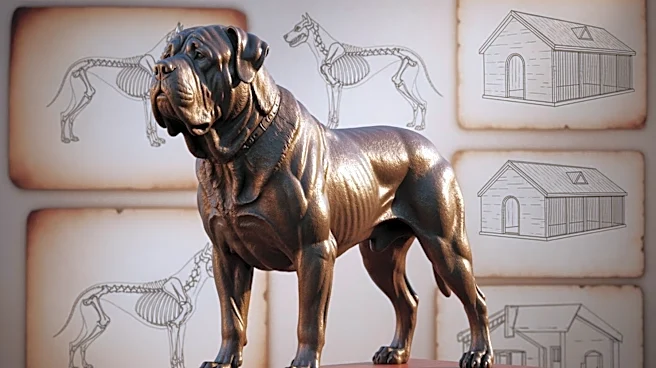



The English Mastiff, a breed known for its massive size and gentle nature, has a rich history that dates back centuries. This article delves into the historical evolution of the English Mastiff, tracing its lineage and development from ancient times to the modern era. The breed's journey is marked by various influences and changes that have shaped it into the noble dog we recognize today.
Ancient Origins and Early Development
The English Mastiff's ancestry can be traced back to ancient
times, with likely descent from the Alaunt and Pugnax Britanniae. These early dogs were known for their strength and size, characteristics that have been preserved in the Mastiff lineage. The breed's development was further influenced by the Alpine Mastiff in the 19th century, contributing to its massive build and distinctive features.
During the Roman conquest of Britain, the Pugnax Britanniae played a significant role, with Roman poet Grattius praising British dogs for their bravery and superiority over the Greek Molossus. This historical context highlights the Mastiff's longstanding reputation as a formidable and noble breed.
The 19th Century and Breed Stabilization
The modern type of English Mastiff was stabilized in the 1880s, following a period of refinement. Systematic breeding efforts in the 19th century, led by individuals like J.W. Thompson and T.V.H. Lukey, were crucial in establishing the breed's characteristics. Thompson's breeding focused on creating a line with a short, broad head and massive build, while Lukey's efforts resulted in taller, less massive dogs.
The collaboration between Thompson and Lukey ultimately led to the creation of the modern Mastiff, although breeding from animals without pedigree continued into the 20th century. This era marked a turning point in the breed's development, setting the foundation for its current form.
Post-War Recovery and Modern Popularity
The English Mastiff faced challenges during the World Wars, with breeding largely halted due to meat rationing and disease. However, the breed was gradually restored in the post-war period, aided by imports from North America. By the late 1950s, the Mastiff had regained its presence, with all modern Mastiffs tracing their lineage back to a few key ancestors.
Today, the English Mastiff is recognized worldwide, celebrated for its grandeur and gentle temperament. Despite its popularity, the breed remains vulnerable in its country of origin, with limited numbers recorded. The historical journey of the English Mastiff reflects its resilience and enduring appeal as a noble and beloved breed.