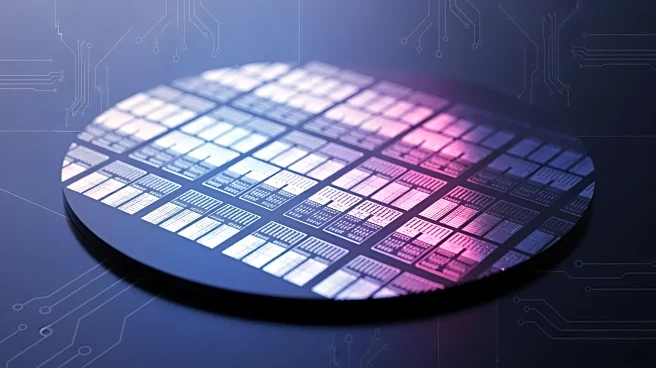




The history of semiconductor technology is a fascinating journey that began in the early 19th century. It has evolved through various stages, marked by significant discoveries and inventions that have shaped modern electronics. From the initial experiments on electrical properties to the development of integrated circuits, semiconductors have revolutionized the way we live and work.
Early Discoveries and Experiments
The understanding of semiconductors started with experiments on the
electrical properties of materials. In the early 19th century, scientists observed phenomena such as the time-temperature coefficient of resistance, rectification, and light-sensitivity. These observations laid the groundwork for future developments in semiconductor technology.
Karl Ferdinand Braun made a significant contribution in 1874 by developing the crystal detector, the first semiconductor device. This invention marked a turning point in the study of semiconductors, as it demonstrated the practical application of these materials in electronic devices.
The Birth of the Transistor
The invention of the transistor in 1947 was a pivotal moment in the history of semiconductors. This device, which could amplify and switch electronic signals, opened up new possibilities for electronic circuits. The transistor's invention led to the development of integrated circuits in the 1960s, which further advanced the capabilities of electronic devices.
Integrated circuits allowed for the miniaturization of electronic components, making it possible to fit thousands of transistors onto a single chip. This innovation paved the way for the development of modern computers and other electronic devices that rely on semiconductor technology.
Modern Semiconductor Applications
Today, semiconductors are used in a wide range of applications, from consumer electronics to industrial machinery. Silicon, the most common semiconductor material, is used in microchips and computer processors, while gallium arsenide is used in laser diodes and solar cells.
The ability to modify the electrical properties of semiconductors through doping and the application of electrical fields has made them indispensable in modern electronics. Semiconductors are used for amplification, switching, and energy conversion, making them a crucial component in the technology that powers our world.
The evolution of semiconductor technology is a testament to human ingenuity and the relentless pursuit of innovation. As we continue to explore new materials and techniques, the future of semiconductors promises even greater advancements and applications.