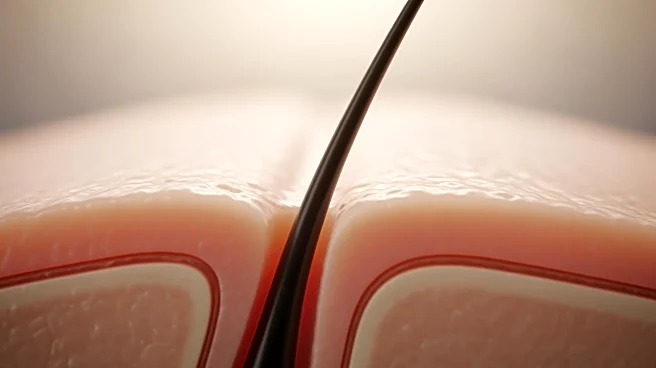




Hair follicles are fascinating structures found in the skin of mammals, playing a crucial role in hair production and growth. These tiny organs are located in the dermal layer of the skin and are composed of various cell types, each with distinct functions. Understanding the anatomy and function of hair follicles provides insight into their role in hair growth and the overall health of the skin.
Structure of Hair Follicles
Hair follicles are complex structures that consist of
multiple components. The primary parts include the hair bulb, the root sheath, and the dermal papilla. The hair bulb is the base of the follicle, where cells divide rapidly to produce the hair shaft. Surrounding the bulb is the root sheath, which provides protection and support. The dermal papilla, located at the base of the bulb, contains blood vessels that supply nutrients to the growing hair.
In addition to these main components, hair follicles are associated with other structures such as sebaceous glands and arrector pili muscles. Sebaceous glands produce sebum, an oily substance that lubricates the hair and skin. The arrector pili muscles are responsible for causing hair to stand on end, a phenomenon known as piloerection, which results in goosebumps.
Hair Growth Cycle
Hair growth occurs in a cyclical process involving several distinct phases. The anagen phase is the active growth stage, during which the hair follicle is fully functional and the hair shaft is produced. This phase can last several years, depending on genetic factors. Following the anagen phase is the catagen phase, a short transitional period where the hair follicle begins to shrink and hair growth slows.
The telogen phase is the resting stage, during which the hair follicle remains inactive. This phase lasts for a few months before the hair is shed, and the cycle begins anew with the anagen phase. The duration of each phase varies depending on the location of the hair on the body, with scalp hair having a longer anagen phase compared to other body hair.
Importance of Hair Follicles
Hair follicles play a vital role in maintaining the health and appearance of the skin. They are involved in the production of different types of hair, such as terminal hair on the scalp and vellus hair on the body. The follicles also contribute to the skin's sensory functions, as they are equipped with receptors that detect changes in the environment.
Moreover, hair follicles are sensitive to hormonal changes and can be affected by various factors, including stress and illness. Understanding the function and structure of hair follicles is essential for diagnosing and treating conditions related to hair growth and skin health. By studying these tiny organs, researchers can develop better treatments for hair loss and other dermatological issues.