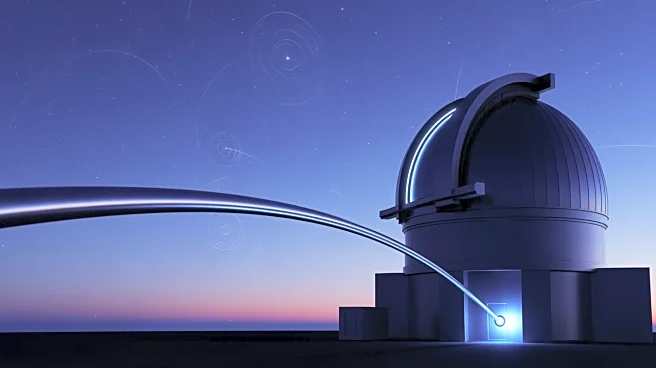

The Laser Interferometer Gravitational-Wave Observatory (LIGO) has revolutionized the field of gravitational wave astronomy, transforming theoretical predictions into observable phenomena. This article
explores how LIGO has impacted the study of gravitational waves and expanded our understanding of the universe.
Theoretical Predictions and Observational Breakthroughs
Gravitational waves were first predicted by Albert Einstein's general theory of relativity in 1916, but their detection remained elusive for nearly a century. LIGO's successful observation of gravitational waves in 2015 marked a pivotal moment in astronomy, confirming Einstein's predictions and opening a new window into the cosmos.
The detection of gravitational waves has provided direct evidence of phenomena such as black hole mergers and neutron star collisions. These observations have validated theoretical models and offered insights into the behavior of massive celestial objects. LIGO's ability to measure minute distortions in spacetime has enabled astronomers to study events that were previously inaccessible, enhancing our understanding of the universe's dynamic nature.
Expanding the Frontiers of Astronomy
LIGO's impact extends beyond confirming theoretical predictions; it has fundamentally changed the way astronomers study the universe. By detecting gravitational waves, LIGO has introduced a new method of observation that complements traditional electromagnetic telescopes. This multimessenger approach allows scientists to gather more comprehensive data, leading to a deeper understanding of cosmic events.
The collaboration between LIGO and other observatories, such as Virgo and KAGRA, has further expanded the global network of gravitational wave detectors. This network enhances the ability to pinpoint the location of gravitational wave sources, improving the accuracy of observations. As a result, astronomers can study the universe with greater precision, uncovering details about the formation and evolution of celestial bodies.
Future Prospects and Scientific Advancements
The success of LIGO has paved the way for future advancements in gravitational wave astronomy. Projects like LIGO-India aim to expand the network of detectors, increasing the sensitivity and range of observations. These efforts promise to uncover new phenomena and provide insights into the fundamental nature of spacetime.
As technology continues to evolve, LIGO's role in gravitational wave astronomy will remain crucial. The observatory's ongoing upgrades and international collaborations will enhance its capabilities, allowing scientists to explore the universe in unprecedented ways. LIGO's impact on astronomy is profound, offering a glimpse into the mysteries of the cosmos and inspiring future generations of researchers.