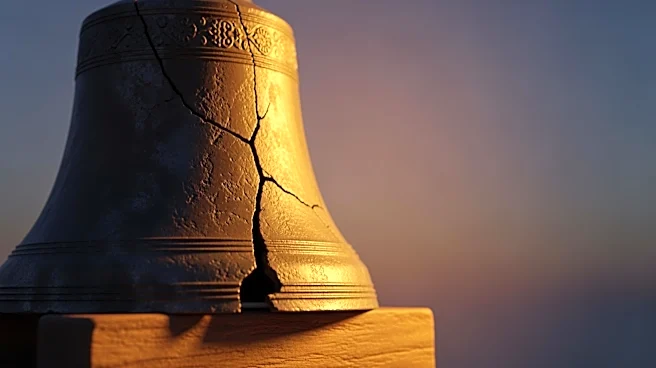








The Liberty Bell, an enduring symbol of American independence, has a rich history that spans centuries. From its commissioning in the 18th century to its current home in the Liberty Bell Center, the bell has witnessed significant moments in American history. This article traces the Liberty Bell's journey through time, highlighting key events that have shaped its legacy.
The Early Years: Commissioning and Recasting
The Liberty Bell was commissioned in 1752 by the Pennsylvania Provincial Assembly
from the London-based firm Lester and Pack. Upon its arrival in Philadelphia, the bell cracked during its first ringing, leading to its recasting by local craftsmen John Pass and John Stow. Their names are inscribed on the bell, marking their role in its creation. Initially, the bell was used to summon lawmakers and alert citizens to public meetings and proclamations.
In 1776, the Liberty Bell is believed to have been among the bells rung to celebrate the first public reading of the Declaration of Independence, although no contemporary account confirms this. Despite this uncertainty, the bell's association with the Declaration has become a defining aspect of its history.
The 19th Century: From Obscurity to Symbolism
After the American Revolution, the Liberty Bell fell into obscurity until the 1830s when it was adopted by abolitionist societies as a symbol of their cause. It was during this period that the bell acquired its famous crack, which some stories claim occurred while ringing after the death of Chief Justice John Marshall in 1835. The bell's journey continued into the late 19th century when it was sent to various expositions, further solidifying its status as a national icon.
In 1876, the bell was moved to the Assembly Room in Independence Hall, where it remained for several decades. During this time, it became a focal point for celebrations and commemorations, including the nation's Centennial festivities.
The 20th Century and Beyond: Preservation and Legacy
In the 20th century, the Liberty Bell became a symbol of freedom during the Cold War and was a popular site for protests in the 1960s. It was moved from Independence Hall to a nearby glass pavilion in 1976 and then to the larger Liberty Bell Center in 2003, where it remains today.
The Liberty Bell's image has been widely used on coins, stamps, and by corporations, further embedding it in American culture. Despite its physical imperfections, the Liberty Bell remains a powerful symbol of the American spirit, representing the nation's enduring commitment to liberty and justice for all.