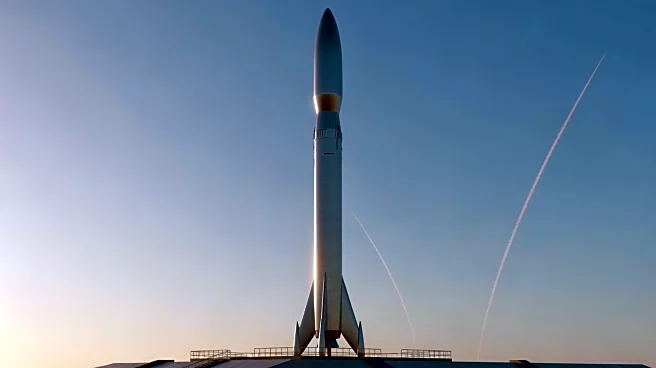



The launch of Saturn I SA-1 on October 27, 1961, marked a pivotal moment in the history of space exploration. As the first flight of the Saturn I rocket, SA-1 was a crucial step in the development of the United States' space capabilities. This article examines the details of the SA-1 mission and its significance in the broader context of the space race.
The Mission Objectives
The primary objective of the SA-1 mission was to test the first stage of the Saturn I rocket. The mission aimed
to validate the design and performance of the rocket's clustered engine configuration, which was a novel approach at the time. The first stage, known as the S-I, was powered by eight H-1 engines, providing a total thrust of 1.5 million pounds-force.
In addition to testing the first stage, the SA-1 mission included dummy upper stages filled with water. These dummy stages were used to simulate the weight and balance of a fully equipped rocket, allowing engineers to assess the vehicle's stability and control during flight. The mission was designed to be suborbital, with the rocket reaching an apogee of 136.5 kilometers before descending back to Earth.
Achievements and Challenges
The SA-1 mission was a resounding success, achieving all of its objectives and providing valuable data for future launches. The rocket performed flawlessly, with the first stage engines firing for approximately 150 seconds before stage separation. The successful test of the clustered engine configuration was a significant milestone, demonstrating the feasibility of this innovative design.
Despite the success of the mission, the SA-1 flight was not without its challenges. The launch team faced considerable tension in the blockhouse, as no launch vehicle had been successful on its first attempt up to that point. The fear of a catastrophic failure loomed large, but the successful launch of SA-1 alleviated these concerns and boosted confidence in the Saturn I program.
Legacy of the SA-1 Mission
The SA-1 mission laid the groundwork for subsequent Saturn I flights and the eventual success of the Apollo program. By proving the reliability of the Saturn I's first stage, the mission paved the way for more ambitious space exploration endeavors. The data collected during the SA-1 flight informed the design and development of future rockets, contributing to the United States' ability to compete in the space race.
In summary, the Saturn I SA-1 mission was a landmark achievement in the history of space exploration. It demonstrated the potential of the Saturn I rocket and set the stage for the monumental accomplishments of the Apollo program, ultimately leading to the first human landing on the Moon.