




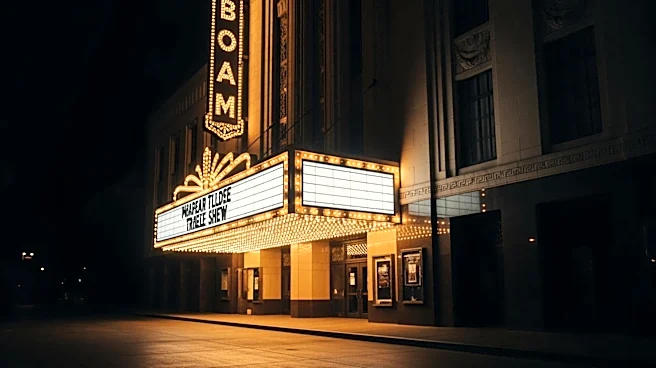
'**Show Boat**' is a fascinating example of how a story can evolve across different media, each time gaining new dimensions and reaching wider audiences. Originally a novel by Edna Ferber published in 1926, 'Show Boat' chronicles the lives of performers on a floating theater along the Mississippi River. This rich narrative was soon adapted into a Broadway musical in 1927 by Jerome Kern and Oscar Hammerstein II, and later into several films, each adding
its own flavor to the tale.
From Page to Stage
Edna Ferber's novel 'Show Boat' was a bestseller, capturing the imagination of readers with its vivid depiction of life on the Mississippi River. The novel spans several decades, from the 1880s to the 1920s, and follows the lives of three generations of performers on the Cotton Blossom, a showboat that travels between small towns. The story's mix of romance, drama, and social issues made it a compelling read, and it wasn't long before it caught the attention of Broadway.
In 1927, Jerome Kern and Oscar Hammerstein II adapted Ferber's novel into a musical, which premiered on Broadway to great acclaim. The musical retained the novel's core themes but added a new layer of emotional depth through its music and lyrics. Songs like "Ol' Man River" and "Can't Help Lovin' Dat Man" became instant classics, helping to cement the musical's place in theater history. The stage adaptation was praised for its innovative approach to storytelling, blending music, drama, and social commentary in a way that was groundbreaking for its time.
The Silver Screen Adaptations
Following the success of the Broadway musical, 'Show Boat' was adapted into film several times, each version bringing something new to the story. The first film adaptation came in 1929, a part-talkie that incorporated some of the musical's songs. However, it was the 1936 and 1951 film versions that truly captured the essence of the stage musical.
The 1936 film, directed by James Whale, is often considered the most faithful adaptation of the stage musical. It featured several members of the original Broadway cast and retained much of the musical's original score. The 1951 MGM film, directed by George Sidney, was a lavish Technicolor production that became one of the studio's most successful musicals. While it made some changes to the story, it retained the musical's core themes and songs, ensuring its continued popularity.
A Legacy of Adaptation
The journey of 'Show Boat' from novel to stage and screen is a testament to the story's enduring appeal. Each adaptation has brought new audiences to Ferber's original tale, while also adding new layers of meaning and interpretation. The musical's exploration of themes like racial inequality and the passage of time continues to resonate with audiences today, ensuring that 'Show Boat' remains a beloved classic in American culture.