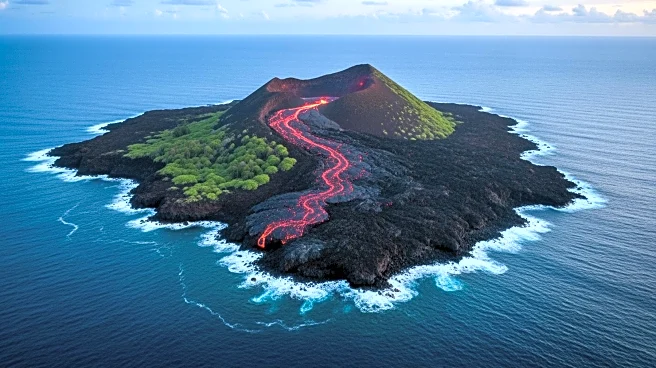

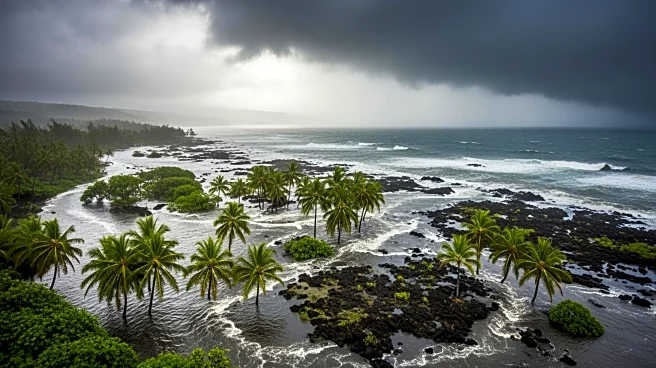
The Hawaiian Islands are a fascinating example of geological processes at work. Located in the North Pacific Ocean, this archipelago consists of eight major volcanic islands, several atolls, and numerous smaller islets. The islands are the exposed peaks of a massive undersea mountain range known as the Hawaiian–Emperor seamount chain, formed by volcanic activity over the Hawaiian hotspot. This article delves into the geological formation and characteristics
of these islands, highlighting their unique features and ongoing volcanic activity.
The Hawaiian Hotspot
The Hawaiian Islands owe their existence to a geological phenomenon known as a hotspot. This hotspot is a stationary area of volcanic activity in the Earth's mantle, which has been creating islands as the Pacific Plate slowly moves northwestward over it. As the plate moves, new volcanoes form over the hotspot, creating a chain of islands. The southeastern island of Hawai'i is currently the most volcanically active, while the islands on the northwest end of the archipelago are older and have been subject to erosion over time.
The age of the Hawaiian Islands has been estimated using potassium-argon dating methods. Studies suggest that the northwesternmost island, Kure Atoll, is the oldest at approximately 28 million years, while the southeasternmost island, Hawai'i, is about 400,000 years old. The only active volcanism in the last 200 years has been on the southeastern island of Hawai'i and the submerged but growing volcano, Kama'ehuakanaloa.
Volcanic Activity and Earthquakes
The Hawaiian Islands are home to several active volcanoes, including Mauna Loa, Mauna Kea, Kilauea, and Hualalai on the Big Island, and Haleakalā on Maui. These volcanoes are primarily composed of basalt, a type of igneous rock that forms from the relatively fluid basaltic magma. This fluidity results in Hawaiian-type eruptions, which are less explosive than those involving andesitic magmas.
The islands experience frequent earthquakes, often triggered by volcanic activity. Seismic activity is highest in the southern part of the chain, where the active volcanoes are located. Earthquakes in Hawaii are generally shallow, occurring at depths ranging from 5 to 20 kilometers, which increases the hazard to local infrastructure and communities. The combination of volcanic activity and seismic events makes the Hawaiian Islands a dynamic and ever-changing landscape.
The Future of the Hawaiian Islands
The Hawaiian Islands continue to evolve as the Pacific Plate moves over the hotspot. The newest volcano, Kama'ehuakanaloa, is currently a submarine volcano located southeast of Hawai'i Island. It is expected to eventually rise above the ocean's surface, becoming the newest addition to the Hawaiian archipelago in 10,000 to 100,000 years.
The ongoing volcanic activity and geological processes in the Hawaiian Islands offer a unique opportunity to study the Earth's dynamic nature. As the islands continue to change and grow, they provide valuable insights into the forces that shape our planet. The Hawaiian Islands stand as a testament to the power of geological processes and the ever-changing nature of the Earth's surface.