
Minecraft, a game that has become a household name, began its journey in 2009 as a small personal project by Markus "Notch" Persson. Over the years, it has transformed into a global phenomenon, captivating
millions of players worldwide. This article explores the historical development of Minecraft, tracing its evolution from the early days of "Cave Game" to its current status as a cultural icon.
The Birth of Minecraft
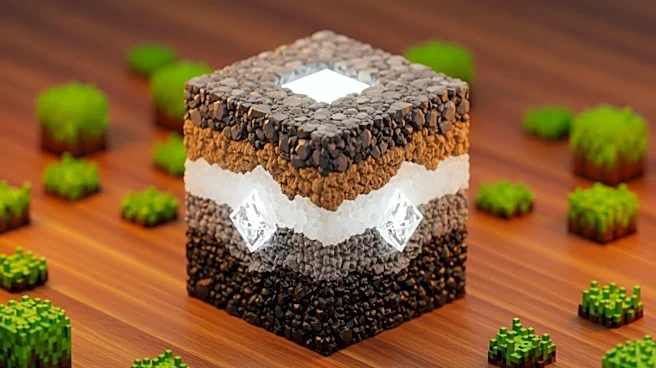
The story of Minecraft begins in May 2009 when Markus Persson, a game developer at King, decided to create a game during his free time. Inspired by games like Infiniminer and Dwarf Fortress, Persson developed the first known versions of Minecraft, initially called "Cave Game." The game featured a world composed of grass and cobblestone blocks that players could place and remove. This simple concept laid the foundation for what would become one of the most influential games of all time.
Persson shared his creation on the TIGSource forums, where it quickly gained attention. The feedback from the community led to the game's renaming to Minecraft and the addition of new features. During this early phase, known as the Classic phase, multiplayer capabilities and a survival mode featuring hostile monsters were introduced. The game's ambient music, composed by C418, also became a defining feature during this period.
Expanding Horizons: Indev, Infdev, and Alpha
As Minecraft's popularity grew, so did its development. On December 23, 2009, the game entered the Indev phase, inheriting features from the Survival Test branch of Classic. This phase saw the introduction of paintings by artist Kristoffer Zetterstrand, adding a new layer of creativity to the game. In February 2010, Persson began experimenting with infinite worlds, leading to the creation of a new development branch called Infdev.
The Alpha phase, which began on June 30, 2010, marked a significant turning point for Minecraft. During this phase, updates were frequent and often released without warning. Notable additions included redstone, a material capable of transmitting signals to alter the state of various blocks, and the introduction of biomes and the Nether dimension. These updates expanded the game's possibilities, allowing players to create complex mechanisms and explore diverse environments.
The Full Release and Beyond
Minecraft's journey from a personal project to a full-fledged game culminated in its official release on November 18, 2011. This release, known as version 1.0.0, introduced several significant changes, including the End dimension and the Ender Dragon boss. The game's success continued to soar, with millions of copies sold and a dedicated player base that only grew larger over time.
In 2014, Microsoft acquired Mojang, the studio behind Minecraft, for $2.5 billion. This acquisition marked a new chapter in the game's history, as it allowed for further expansion and development. Subsequent updates introduced new features, such as the Combat Update in 2016, which revamped the game's combat mechanics, and the Update Aquatic in 2018, which overhauled the ocean biomes.
Today, Minecraft remains a beloved game with a vibrant community and a wide range of spin-off titles, including Minecraft Dungeons and Minecraft Legends. Its impact on the gaming industry and popular culture is undeniable, and its journey from a humble "Cave Game" to a global phenomenon is a testament to the creativity and passion of its developers and players alike.