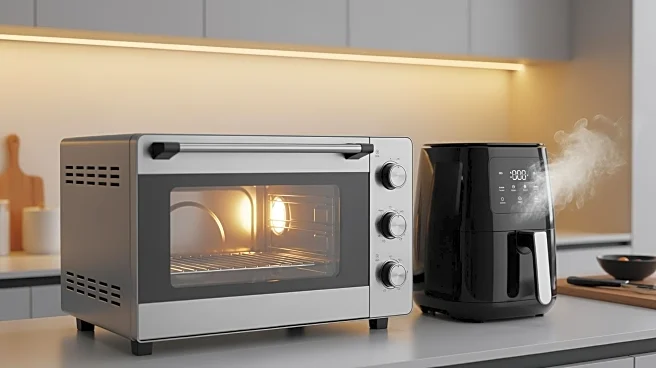




Convection ovens and air fryers have become staples in modern kitchens, offering efficient cooking solutions. These appliances have evolved significantly over the years, driven by technological advancements and changing consumer needs. This article delves into the history and development of these innovative cooking devices, highlighting key milestones and technological breakthroughs.
Early Innovations in Convection Cooking
The concept of convection cooking dates back to the early 20th century.
The first oven with a fan to circulate air was invented in 1914, although it was not commercially launched at the time. It wasn't until 1945 that the Maxson Whirlwind Oven became the first widely used convection oven. This marked a significant advancement in cooking technology, as convection ovens allowed for faster and more even cooking by circulating hot air around the food.
In the years following World War II, convection ovens gained popularity in both domestic and industrial settings. They were particularly valued for their ability to cook food more evenly and quickly than traditional ovens. By the late 20th century, convection ovens had become a common feature in many households, offering a versatile cooking solution for a variety of dishes.
The Rise of Air Fryers
The air fryer, a modern twist on convection cooking, was invented by Dutch engineer Fred van der Weij. Introduced to the market in 2010 by Philips, the air fryer quickly gained popularity for its ability to simulate deep frying without the need for large amounts of oil. This was achieved by using a fan to circulate hot air at high speeds, creating a crispy outer layer on foods through the Maillard reaction.
Air fryers offered a healthier alternative to traditional frying methods, appealing to health-conscious consumers. They also provided a convenient and efficient cooking solution, as they were easier to clean and required less cooking time than conventional ovens. By 2018, the term "air fryer" had become widely recognized, and the appliance was a common feature in many kitchens around the world.
Technological Advancements and Market Trends
The late 2010s and early 2020s saw a surge in the popularity of both convection ovens and air fryers. In the United States, the number of households with a convection oven increased significantly, with 36% of households owning one in 2020 and an estimated 60% by 2023. This growth was driven by the appliances' efficiency and versatility, as well as the increasing availability of pre-air-fried products and air frying instructions on packaged foods.
In the UK, air fryers became particularly popular in the early 2020s, with a study in 2024 revealing that one in five Britons considered air fryers their most commonly used cooking device. This trend reflects a broader shift towards healthier and more convenient cooking methods, as consumers continue to seek out appliances that offer both efficiency and versatility.
The evolution of convection ovens and air fryers highlights the ongoing innovation in kitchen technology, driven by consumer demand for healthier, faster, and more efficient cooking solutions. As these appliances continue to evolve, they are likely to remain essential tools in modern kitchens for years to come.