




The Skylab program, NASA's first foray into space station operations, was marked by both significant challenges and remarkable triumphs. The three crewed missions to Skylab faced numerous obstacles, from technical malfunctions to the demands of long-duration spaceflight. Yet, each mission overcame these hurdles, contributing to the program's overall success. This article delves into the challenges faced during Skylab's crewed missions and the innovative
solutions that led to their triumphs.
Overcoming Technical Malfunctions
The launch of Skylab was not without its difficulties. The space station suffered significant damage during its ascent, losing its micrometeoroid shield and one of its primary solar panels. This damage threatened the station's viability, as it led to overheating and a power deficit. The first crewed mission, Skylab 2, was tasked with addressing these critical issues.
The Skylab 2 crew, consisting of astronauts Pete Conrad, Joseph P. Kerwin, and Paul J. Weitz, deployed a parasol-like sunshade to lower the station's temperature. This innovative solution, designed by Jack Kinzler, was crucial in making the station habitable. The crew also conducted spacewalks to free a jammed solar panel, restoring power to the station. These successful repairs demonstrated the feasibility of in-space maintenance and set a precedent for future missions.
Adapting to Long-Duration Spaceflight
Skylab's missions were among the first to explore the challenges of long-duration spaceflight. The crews had to adapt to the physical and psychological demands of extended stays in space. Skylab 3, which lasted 59 days, and Skylab 4, which lasted 84 days, provided valuable insights into the effects of prolonged space travel on the human body.
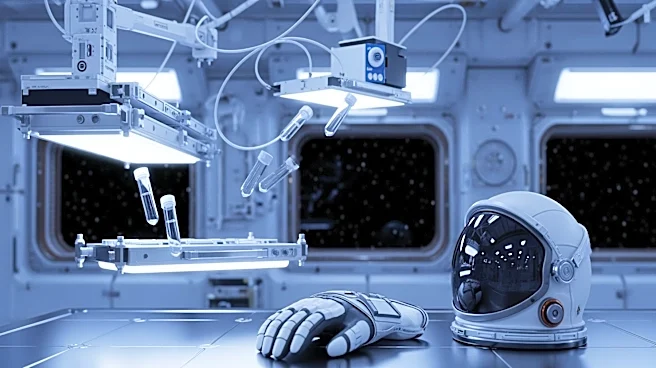
Astronauts experienced changes in fluid distribution, muscle atrophy, and bone density loss. The missions included extensive medical experiments to study these effects and develop countermeasures. The data collected informed the design of exercise regimens and other measures to mitigate the impacts of long-duration spaceflight, benefiting future missions to the International Space Station and beyond.
Scientific Achievements Amidst Challenges
Despite the challenges faced, Skylab's crewed missions achieved significant scientific milestones. The station conducted over 2,000 hours of experiments, including solar observations and Earth photography. The Apollo Telescope Mount provided unprecedented views of the Sun, capturing solar flares and other phenomena that were previously impossible to observe.
The scientific data collected during Skylab's missions contributed to our understanding of space and Earth's environment. These achievements underscored the importance of space stations as platforms for scientific research, paving the way for future endeavors in space exploration.
In summary, the challenges faced during Skylab's crewed missions were met with innovative solutions and determination. The program's triumphs in overcoming technical malfunctions, adapting to long-duration spaceflight, and achieving scientific milestones laid the groundwork for future space exploration efforts.