


Prayer beads are a fascinating aspect of religious practice, varying significantly in structure and use across different faiths. While they serve the common purpose of aiding in prayer and meditation, the specific design and application of these beads reflect the unique traditions and beliefs of each religion. This article explores the diverse structures and uses of prayer beads in various religious contexts.
Structural Variations
The structure of prayer beads varies widely
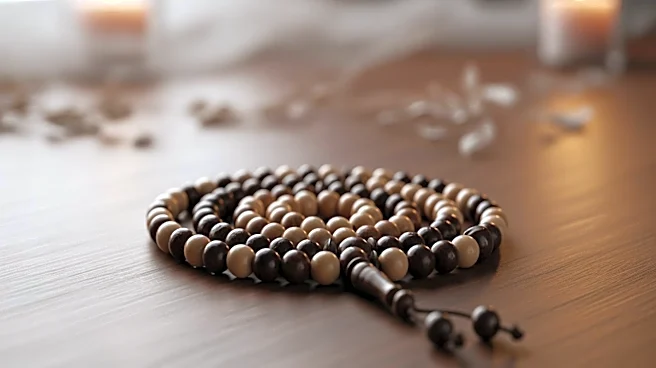
among religions, each design tailored to the specific needs of the faith. Islamic prayer beads, known as Misbaha or Tasbih, typically have 100 beads, divided into sections of 33, with an additional bead. This structure corresponds to the names of God in Islam. In contrast, Buddhists and Hindus use the Japa Mala, usually consisting of 108 beads, or sometimes 27 beads counted four times.
The Catholic rosary is composed of 59 beads, arranged in decades of ten Hail Marys, preceded by an Our Father and followed by a Glory Be. The Anglican prayer beads, developed in the mid-1980s, consist of 33 beads, representing the years of Jesus' life. Eastern Orthodox Christians use a knotted prayer rope called a komboskini, with 100 knots, although variations with 50 or 33 knots exist.
Practical Uses
The primary function of prayer beads is to keep track of prayers, allowing the user to focus more on the spiritual aspect rather than the counting. In Christianity, the rosary is used to meditate on the Mysteries, events in the life of Jesus and Mary. The beads help maintain the sequence of prayers, enhancing the meditative experience.
In Islam, the misbaha is used for dhikr, repetitive utterances to praise and glorify God. The beads facilitate the counting of these utterances, ensuring the correct number is reached. Similarly, in Buddhism and Hinduism, the Japa Mala aids in the repetition of mantras, fostering concentration and spiritual growth.
Symbolic and Cultural Significance
Beyond their practical use, prayer beads hold symbolic and cultural significance. In Christianity, the rosary is considered a spiritual sword, a tool for meditation and contemplation. It represents participation in the life of Mary, whose focus was Christ. In Islam, the misbaha symbolizes devotion and the continuous remembrance of God.
In Hinduism, the Japa Mala is used for meditation and yoga, promoting self-realization and positivity. The materials used for the beads, such as Rudraksha seeds or tulsi stems, carry their own symbolic meanings, enhancing the spiritual experience. Across all these traditions, prayer beads serve as a tangible connection to the divine, enriching religious practices and devotion.