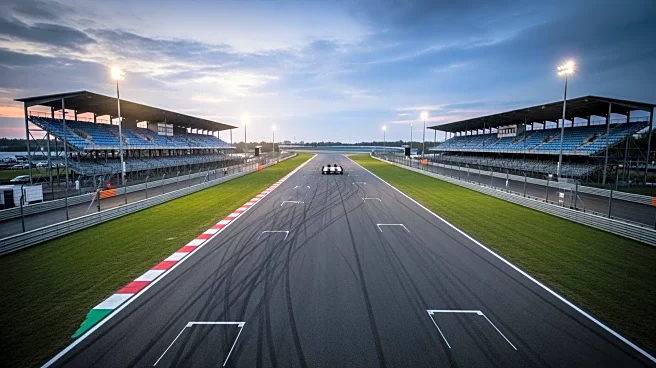



Kentucky Speedway, once a bustling hub for NASCAR and IndyCar races, has seen a dramatic transformation over the years. Located in Sparta, Kentucky, this 1.5-mile tri-oval track was a dream project that aimed to bring top-tier racing to the region. From its ambitious beginnings in the late 1990s to its current status as a multi-use rental complex, the speedway's journey is a tale of high hopes, significant challenges, and eventual decline.
The Ambitious Beginnings
In the late
1990s, Jerry Carroll, then-owner of Turfway Park, sought to diversify his business interests due to declining attendance at his horse racing facility. Inspired by the success of Texas Motor Speedway, Carroll envisioned a modern auto racing facility in Northern Kentucky. In January 1998, he announced plans to build a $132 million, 1.5-mile track with an initial seating capacity of 60,000. The project was part of a broader trend during a boom in stock car racing, with several new tracks vying for a coveted NASCAR Cup Series weekend.
Construction of the speedway began in July 1998, with the goal of hosting events by 2000. The track was designed with input from NASCAR driver Darrell Waltrip, who advised on its banking and layout. By the time it opened in June 2000, the speedway had expanded its seating capacity to 70,000 and secured a NASCAR Truck Series race as its inaugural event.
Early Success and Challenges
Kentucky Speedway quickly became a popular venue, hosting a variety of racing events, including NASCAR Busch Series and IndyCar races. The track's first major event, a NASCAR Truck Series race, was held in June 2000, drawing a near sell-out crowd despite heavy rain. However, the event also highlighted logistical challenges, as muddy parking lots and traffic jams plagued the inaugural weekend.
Despite these early hurdles, the speedway continued to attract major racing events. In 2001, it hosted its first NASCAR Busch Series race, won by Kevin Harvick. The track also became a testing ground for IndyCar drivers, although a serious crash involving actor and IndyCar hopeful Jason Priestley in 2002 underscored the risks associated with high-speed racing.
The Quest for a Cup Series Race
From the outset, securing a NASCAR Cup Series race was a primary goal for Kentucky Speedway. However, despite repeated applications, NASCAR declined to award the track a Cup Series date, citing its expansion plans. Frustrated by the lack of progress, Carroll and his partners filed an antitrust lawsuit against NASCAR and the International Speedway Corporation in 2005, seeking a Cup Series race and over $400 million in damages.
The lawsuit was a bold move, but it ultimately failed to achieve its intended outcome. In 2008, the track was sold to Bruton Smith's Speedway Motorsports, Inc. (SMI), which finally secured a Cup Series date for 2011. However, the inaugural Cup Series race was marred by severe traffic issues, with thousands of fans unable to reach the venue. Despite efforts to improve infrastructure and parking, the speedway struggled to maintain its initial momentum.
Decline and Transformation
Over the next decade, Kentucky Speedway faced declining attendance and revenue. The track's rough surface, once praised by drivers, became a point of contention, leading to a repave in 2016. Despite these efforts, the speedway was dropped from the NASCAR schedule in 2021, marking the end of its tenure as a major racing venue.
Today, Kentucky Speedway has been repurposed as a multi-use rental complex, hosting special events, commercial productions, and music festivals. While it no longer hosts top-tier racing, the speedway remains a testament to the highs and lows of motorsport ventures. Its story is a reminder of the challenges faced by regional tracks in securing and sustaining major racing events.