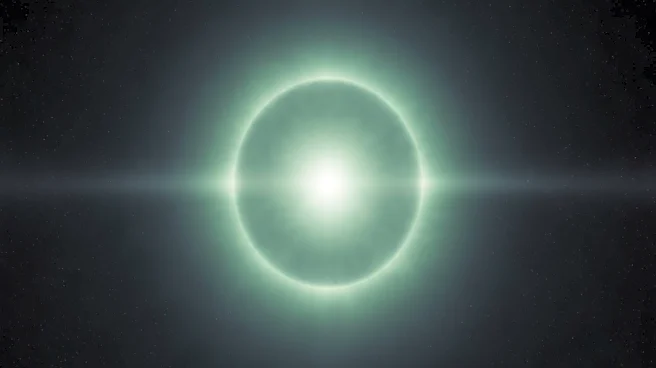




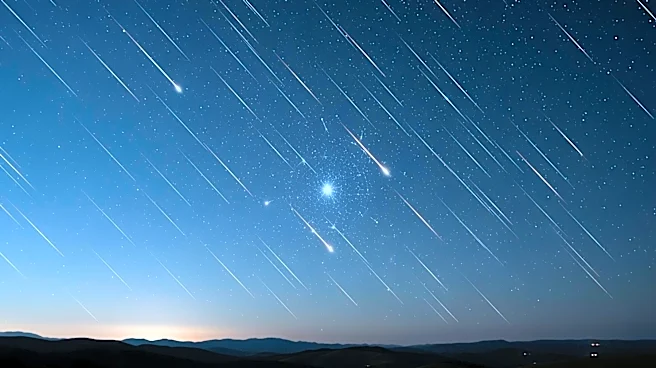
Gegenschein, also known as counterglow, is a captivating celestial phenomenon that appears as a faintly bright spot in the night sky, directly opposite the Sun. This optical effect is caused by the backscatter of sunlight by interplanetary dust, making it a part of the broader zodiacal light band. While less commonly observed than zodiacal light, gegenschein offers a unique glimpse into the interactions between sunlight and cosmic dust.
Understanding Gegenschein
Gegenschein is distinguished from zodiacal light by its high angle of reflection of sunlight on dust particles. It forms a slightly brighter elliptical spot, about 8–10 degrees across, directly opposite the Sun within the dimmer band of zodiacal light. The intensity of gegenschein is enhanced because each dust particle is seen at full phase, contributing to its distinct appearance.The apparent
magnitude of gegenschein is challenging to measure, typically ranging from +5 to +6, with a very low surface brightness in the +10 to +12 magnitude range. This makes it a subtle yet intriguing feature of the night sky, best observed in areas with minimal light pollution.
Historical Observations and Theories
The phenomenon of gegenschein has been observed and studied for centuries. It is commonly stated that the French Jesuit astronomer Esprit Pézenas first described it in 1730, although later research suggests that Danish astronomer Theodor Brorsen was the first to observe and describe it in 1854. Brorsen's investigations laid the groundwork for understanding gegenschein as a result of sunlight scattering by interplanetary dust.Early theories suggested that gegenschein was due to a higher concentration of particles centered at the L2 point of the Earth-Sun system. However, this theory was refuted in 1970 when more precise observations showed no significant shadow at the antisolar point, indicating that material around the L2 point could contribute at most 6% of gegenschein's light.
Modern Observations and Challenges
In modern times, gegenschein is not visible in most inhabited regions due to light pollution. However, it remains a subject of interest for astronomers and sky enthusiasts who seek out dark skies to observe this elusive glow. The study of gegenschein provides valuable insights into the distribution and behavior of interplanetary dust, contributing to our broader understanding of the solar system.Despite its faintness, gegenschein continues to captivate those who seek to understand the intricate dance of light and dust in our cosmic neighborhood. Its presence in the night sky serves as a reminder of the subtle yet profound interactions that shape our view of the universe.