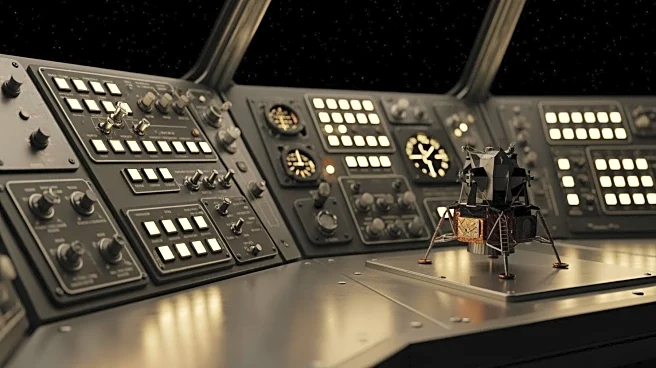




The Apollo 5 mission, launched on January 22, 1968, was a crucial step in NASA's quest to land humans on the Moon. However, the journey to this uncrewed test flight was fraught with delays and technical challenges. These obstacles tested the resilience and ingenuity of NASA and its contractors, ultimately leading to a successful mission that verified the Apollo Lunar Module's capabilities.
Development Delays
The Apollo 5 mission experienced significant delays, primarily
due to the development of the Lunar Module (LM) by Grumman Aircraft. Originally, NASA's Apollo Program Manager, Major General Samuel C. Phillips, hoped for an uncrewed test flight of LM-1 in April 1967. However, manufacturing difficulties led to repeated postponements, with the LM-1 arriving at Kennedy Space Center in June 1967.
The delays were compounded by the tragic Apollo 1 fire in January 1967, which resulted in the loss of three astronauts. This incident led to the reassignment of the Saturn IB rocket, originally intended for Apollo 1, to Apollo 5. The rocket was moved to Launch Complex 37, replacing the planned AS-206 booster. Despite these setbacks, NASA remained committed to the mission, with a dedicated team working tirelessly to address the challenges.
Technical Challenges
Once the LM-1 arrived at Kennedy Space Center, it underwent extensive testing and modifications. A team of 400 personnel, led by John J. Williams, ensured the LM met specifications. However, leaks in the LM's ascent stage required demating and remating of the stages for repairs. These issues persisted, with additional leaks discovered in September 1967, necessitating further repairs.
Despite these technical challenges, NASA pressed forward, with Mission Director William C. Schneider issuing mission rules in November 1967. The LM was mated to its launch vehicle, and the space vehicle readiness test was completed in December. Minor faults, such as clogged filters, led to additional delays, but the countdown demonstration test concluded on January 19, 1968, paving the way for the launch.
Overcoming Obstacles
The Apollo 5 mission ultimately overcame its delays and technical challenges, launching successfully on January 22, 1968. The mission verified the operation of the LM's subsystems, including the ascent and descent engines, and conducted a "fire in the hole" test. Despite programming issues that led to an alternate mission plan, the mission achieved its objectives.
The success of Apollo 5 was a testament to the dedication and expertise of NASA's flight control teams, led by Flight Director Gene Kranz. The mission's accomplishments allowed NASA to cancel a planned second uncrewed test flight, accelerating the timeline for landing astronauts on the Moon. Apollo 5's legacy continued with the first crewed LM flight on Apollo 9 in March 1969, bringing NASA closer to fulfilling its lunar ambitions.